

Your phone is stealing your business. Take it back!
A few months ago, I realized something scary. I was checking my phone over 60 times a day. Not because I needed to—because I couldn’t stop myself.
Between client emails, social media for my business, SM groups, notifications, and mindless scrolling, when things got hard? My phone had become my biggest source of stress instead of a business tool. I felt constantly behind, perpetually distracted, and completely overwhelmed.
The worst part? I was living, breathing, and teaching productivity and intentional living while being a slave to my notifications. The irony wasn’t lost on me.
That’s when I discovered digital minimalism. Not the extreme “delete all social media and live off-grid” version. But practical digital minimalism for online entrepreneurs who actually need technology to run their businesses.
Within two weeks, my focus returned. My anxiety decreased. And ironically? My business grew because I wasn’t wasting three hours a day in reactive mode.
Why do online entrepreneurs need digital minimalism more than anyone else? Because our businesses live on our devices—and the line between “working” and “scrolling” disappears completely.
What Is Digital Minimalism for Online Entrepreneurs?
Digital minimalism is the practice of being intentional about your technology use. It’s not about using less—it’s about using better. For online entrepreneurs, digital minimalism is crucial because we can’t just “quit social media” or “go offline for a week.”
According to Harvard Business Review’s research on digital distractions, knowledge workers check their email and messaging apps every 6 minutes on average. That’s 10 times per hour. No wonder we feel scattered, anxious, and unable to focus on deep work.
Digital minimalism for online entrepreneurs means designing your digital life to support your business instead of sabotaging it. +
It means using technology as a tool, not a pacifier for discomfort. And if you’re juggling client work, content creation, admin tasks, and trying to have a life? Digital minimalism isn’t optional—it’s survival.
The Real Cost of Digital Overwhelm
Digital overwhelm isn’t just annoying. It’s expensive. Every notification pulls you out of deep work. It takes an average of 23 minutes to fully refocus after an interruption.
If you’re interrupted 10 times in a workday? That’s nearly 4 hours of lost productivity. But the cost goes deeper. Digital overwhelm triggers stress responses in your body. Constant context-switching exhausts your brain.
You start working more hours but accomplish less. You feel guilty when you’re not working. You feel scattered when you are working. The burnout cycle begins.
Digital minimalism breaks that cycle. Not by adding more rules, but by creating systems that protect your attention like the valuable resource it is.
If this sounds familiar, you might also resonate with my post on How Intentional Living Stops Self-Sabotage—because digital overwhelm is often the distraction we retreat to when things get uncomfortable.
13 Digital Minimalism Strategies That Actually Work
1. Conduct a Digital Audit (Find Your Time Thieves)
You can’t fix what you don’t measure. For three days, track every digital interaction honestly. Use your phone’s screen time feature.
Check how many times you open each app. Note when you mindlessly grab your phone. The data will shock you—and that’s good.
Most online entrepreneurs discover they spend 2-4 hours daily on activities that generate zero revenue and maximum stress.
Here are 16 Effective Time Management Techniques for Productivity that may help.
2. Delete Apps You Don’t Actually Need
Be ruthless here. If an app doesn’t directly serve your business or genuinely improve your life, delete it. Games. News apps. Shopping apps.
That meditation app you downloaded six months ago and never opened. All of it—gone. You can always reinstall if you truly need it. (Spoiler: you won’t.)
I deleted 23 apps from my phone. I’ve missed exactly zero of them.
3. Turn Off All Non-Essential Notifications
This single change will transform your focus. Go into your phone settings right now. Turn off notifications for everything except calls and texts from actual humans you know.
Social media notifications? Off. Newsletter and promotional email notifications? Off.. Every app is begging for your attention? Off.
You’ll check these things on YOUR schedule, not theirs. Your phone should serve you, not summon you.
4. Implement Time Blocking for Digital Tasks
Stop living in reactive mode. Block specific times for email, social media, and admin work. Outside those blocks? Your apps are closed.
I check my email at 8 AM. Social media for business happens 11-11:30 AM and 6-6:30 PM. That’s it.
Everything else is deep work time, where my phone is in work mode, and it’s found on the other side of my bed.
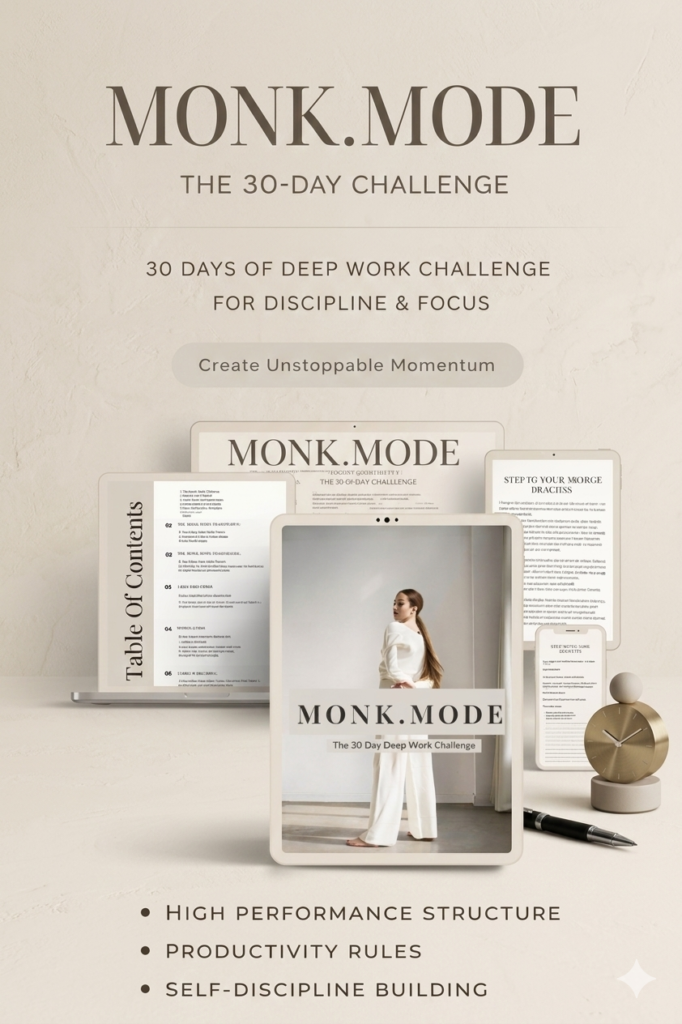
For help building systems that support focus, check out my Monk Mode: 30 Day Deep Work Challenge.

Eliminate distractions and build unbreakable deep work habits in 30 days. No more “busy work” excuses—just real progress.
5. Use Separate Devices for Work and Personal (If Possible)
If you can afford it, keep one device for work and one for personal life. When work is done, the work device gets turned off. Can’t afford two devices?
Create separate profiles or use focus modes that hide work apps after hours. The goal is psychological separation—your brain needs to know when work ends.
Learn more about boundaries 9 Work-Life Boundaries You Need When Working From Home
6. Batch Content Creation and Consumption
Don’t create one Instagram post, then scroll for 20 minutes. Don’t answer one email, then check three apps. Batch similar tasks together.
Create all your social content for the week in one focused session. Consume educational content during designated learning time only.
This reduces context-switching and protects your creative energy.
7. Unsubscribe Aggressively
Every newsletter, promotion, and “just checking in” email that doesn’t serve your business goals? Unsubscribe. Right now.
Yes, even from other online entrepreneurs you admire. Your inbox is not a favor bank. Your attention is valuable.
I went from 40+ emails daily to under 15. The peace is unmatched.
8. Establish “No Phone Zones” in Your Day
Designate times and places where your phone doesn’t exist. First hour of the morning. During meals. In your bedroom.
I got myself an Echo Spot alarm clock instead of my phone, and it’s a total game-changer. This stopped me from checking Instagram before my eyes were fully open.
Small shift, massive impact.
9. Replace Scrolling with Intentional Breaks
When you want to “just check” your phone, ask yourself: What am I avoiding right now? Usually, it’s discomfort, boredom, or a hard task.
Instead of scrolling, take a real break. Walk outside for five minutes. Stretch. Make tea.
Give your brain actual rest instead of more stimulation. For more on creating routines that support your wellbeing, read 13 Emotional Minimalism Habits that Stop Draining Your Energy.
10. Use Website Blockers During Deep Work
You can’t trust your willpower when you’re tired or stuck. Use technology to protect you from technology. Install blockers that restrict access to time-wasting sites during work hours.
I use Freedom to block social media, news sites, and YouTube during my deep work blocks. It’s like having a digital bodyguard for your focus.
11. Schedule Social Media Like Business Meetings
Stop treating social media as a “whenever I feel like it” activity. It’s a business task that deserves scheduled time—not your entire day. Put “Social Media: Content + Engagement” on your calendar.
Show up, do the work, then log off. No mindless scrolling disguised as “market research.”
You’ll accomplish more in 30 focused minutes than in 3 scattered hours.
12. Create an Evening Digital Shutdown Ritual
Decide when your digital workday ends. For me, it’s 8:30 PM. At 8:00 PM, I start my shutdown ritual.
Close all work apps. Move tomorrow’s top 3 tasks to a planner. Plug my phone into the charger on my work desk, away from my bed.
Open my Mindful Morning and Evening Planner to reflect on the day.

Catch self-sabotage patterns early and set intentions every morning. Your daily system to stay on track instead of drifting into digital overwhelm.
13. Audit Quarterly and Adjust
Digital minimalism isn’t set-it-and-forget-it. Technology evolves. Your business changes.
What worked last quarter might not work now. Every three months, repeat your digital audit. What’s working? What’s creeping back?
Adjust your strategies accordingly. This quarterly check-in keeps you from drifting back into old patterns.
The Unexpected Benefits of Digital Minimalism
When I started implementing these digital minimalism strategies, I expected to feel more focused. That happened. But the other benefits surprised me.
- My anxiety decreased dramatically. Without constant notifications, my nervous system could actually relax. I stopped feeling like I was always missing out.
- My creativity returned. Boredom—actual, real boredom—became possible again. And that’s where ideas live.
- All my best business concepts came during phone-free walks, not during scroll sessions. My relationships improved. I was present during conversations instead of half-listening while thinking about what notification just buzzed.
- And my business grew. Because I was working ON it during focused blocks instead of reacting to everyone else’s agenda all day. Digital minimalism gave me back control of my time, my attention, and my business.
How to Start Your Digital Minimalism Journey
Don’t try to implement all 13 strategies tomorrow. That’s how you fail and give up. Pick one. Just one.
Maybe it’s turning off notifications. Or scheduling social media time. Or creating an evening shutdown ritual. Do that one thing for two weeks.
Let it become automatic. Then add the next strategy. Sustainable change happens slowly, not dramatically.
Digital minimalism is a practice, not a destination. Some days you’ll nail it. Some days you’ll check Instagram 47 times before lunch. That’s fine. Progress over perfection, always.
Common Digital Minimalism Mistakes to Avoid
- Don’t go extreme and delete everything in a panic. You need some digital tools for your business. The goal is intentional use, not no use.
- Don’t treat this as punishment. Digital minimalism isn’t about deprivation—it’s about freedom. You’re not giving up technology. You’re taking back your attention.
- Don’t forget to communicate boundaries. Tell clients you check your email twice daily. Set expectations for response times.
- Most people respect boundaries once you establish them clearly. And don’t judge yourself for struggling. If this were easy, everyone would do it.
Why Digital Minimalism Matters More Than You Think
Digital overwhelm isn’t just about productivity. It’s about who you’re becoming. When you live in constant reactive mode, you’re not building—you’re maintaining.
You’re not creating—you’re consuming. You’re not leading your business—you’re being led by it. Digital minimalism gives you back the mental space to think strategically.
To plan proactively. To show up as the leader your business needs, instead of the frazzled entrepreneur drowning in notifications. Your business deserves a focused founder.
Your clients deserve your full attention. And you deserve to feel calm, capable, and in control. That’s what digital minimalism makes possible.
Frequently Asked Questions About Digital Minimalism
Can online entrepreneurs really practice digital minimalism when our businesses depend on being online?
Absolutely. Digital minimalism doesn’t mean using less technology—it means using it intentionally. You can run a successful online business by checking email twice daily instead of 50 times. The key is being deliberate about when and how you use digital tools.
What if my clients expect immediate responses and I can’t just “turn off notifications”?
Set clear expectations upfront—most clients respect boundaries once established. Let them know you check messages at specific times and respond within 24 hours. For emergencies, provide a separate contact method. Very few things are actually urgent.










2 comments
Jenna | Heavenly Spiced
This is so helpful for me. I am also guilty of looking at my phone way too many times throughout the day. Thank you for these practical tips!
LaniAuthor
So happy this resonated with you! I’m right there with you on the phone habit, but practical steps can really help us stay more present.