

Clarity isn’t found. It’s created—one question at a time.
A few years ago, in December 2023, I sat down to plan 2024 like I always did. I made a list of goals. Get more clients. Build the business. Make more money. Change my lifestyle. Be consistent. You know the usual.
By March 2024, I was zigzagging between multiple goals that went nowhere. These WERE my goals. My real dreams. But here’s the problem—my why wasn’t deep enough to sustain the work.
I wanted to build a digital product business. I wanted to build a brand. I wanted to publish a book. I wanted to learn AI design and video editing. All at once. I’d jump from one learning platform to another, consuming information but never actually finishing anything.
There was no urgency. No tangible deadline, no system, no clear vision. No deep enough reason to choose one path over another. So I tried to do everything—and ended up mastering nothing.
That’s when I discovered something that changed everything. The problem wasn’t my goals—they were real dreams I genuinely wanted.
The problem was that I’d never clearly defined my vision. I didn’t know WHICH goal mattered most. I didn’t know WHY it had to happen NOW. I had no system for vision planning to keep me focused when the next shiny opportunity appeared.
In late 2024, I asked myself thirteen specific questions as part of a vision planning process that forced me to get honest about what I truly wanted, what mattered most, and the kind of life I wanted to create.
This process gave me more clarity in two hours than years of scattered goal-setting. 2025 became my turning point—I set goals with vision, purpose, and urgency, and for the first time, I actually followed through and saw real results.
Now, as I plan for 2026, I’m not starting from scratch. I’m perfecting a system that already proved itself. And when I set my 2026 goals this time? They feel different. Not because they’re new—but because I finally have a roadmap that works.
I finally understand my deep why. I finally created urgency around what matters most. And finally—I have a system that says “this before that,” not “everything at once.”
Why do most people set goals without ever getting clear on their vision first—and how does that guarantee they’ll abandon those goals by spring? Because goals without vision are just tasks. Vision gives goals meaning.
What Is Vision Planning (And Why It Matters More Than Goals)
A vision is the big picture of the life you’re creating. Vision planning is the process of intentionally defining that picture before setting goals. Goals are what you do. Vision is why you do it.
Most people skip the vision planning and jump straight to goal-setting. That’s why New Year’s resolutions fail by February. You’re chasing outcomes without understanding the deeper why behind them.
According to Harvard Business Review research on goal-setting, people who connect their goals to a larger personal vision are 42% more likely to achieve them. Vision provides context, meaning, and motivation when things get hard.
Vision planning for 2026 means understanding what you value, what brings you joy, what kind of person you want to become, and what legacy you want to build. Goals flow naturally from that clarity.
If you’ve been setting goals that never stick, the problem isn’t your willpower. It’s that you haven’t done the vision work first. These nine vision planning questions fix that.
Why These 13 Questions Work (When Goal-Setting Alone Doesn’t)
Traditional goal-setting asks: What do you want to achieve? These questions ask something deeper: Who do you want to become? How do you want to feel? What really matters to you?
The difference is massive. Achievement-focused goals are external. They’re about proving something, hitting numbers, and checking boxes. Vision-focused questions are internal. They’re about alignment, purpose, and creating a life that actually feels good to live.
When your goals are rooted in a clear vision, they stop feeling like obligations. They become expressions of the life you’re intentionally building. That shift changes everything.
For more on building a year-round vision instead of arbitrary resolutions, read my post on How Intentional Living Stops Self-Sabotage and Helps You Finish Strong in 2026.
Thirteen Vision Planning Questions to Create Your Clearest Vision for 2026
Question 1: What Did I Learn About Myself in 2025?
Before you plan forward, look back. What worked this year? What drained you? When did you feel most alive? When did you feel most misaligned?
Write down 5-10 lessons from 2025. These insights tell you what to keep, what to release, and what to never repeat. Your past is data—use it to inform your future vision.
Don’t skip this question. Clarity about what didn’t work is just as valuable as clarity about what did.
Question 2: If No One Ever Knew About My Life, What Would I Want It to Look Like?
This question cuts through all the noise. Remove the Instagram performance. Remove the need to impress. Remove what your family expects or what society says success looks like.
If your life were completely private and no one ever knew about your achievements, failures, or choices, what would you genuinely want? That’s your true vision. Everything else is noise.
Write this answer without editing yourself. Be honest. This is just for you.
Related post: How to Rebrand Your Life in 90 Days and Live to Your Highest Potential
Question 3: What Do I Want to Feel More of in 2026?
Most people focus on what they want to have or achieve. This question asks: how do you want to FEEL? Peace? Freedom? Joy? Connection? Confidence? Purpose?
Feelings are the real goal. You don’t want a million dollars—you want the freedom and security it represents. You don’t want a relationship—you want love and connection. Identify the feelings, then build goals that create those feelings.
When you’re clear on how you want to feel, your vision for 2026 becomes much easier to define.
Question 4: What Am I Ready to Let Go Of?
Vision isn’t just about what you’re adding. It’s about what you’re releasing. What habits, relationships, beliefs, or commitments are you ready to release in 2026?
Maybe it’s people-pleasing. Maybe it’s overworking. Maybe it’s the belief that you have to do everything perfectly. Maybe it’s relationships that drain you. Write it down. Give yourself permission to let go.
Releasing what doesn’t serve you creates space for what does. This is essential vision planning work.
Question 5: What Pattern Keeps Repeating That I Need to Break?
Look at the last 3-5 years honestly. What keeps showing up? Do you always overcommit? Start projects but never finish? Choose money over joy? Say yes when you mean no?
These patterns reveal where you’re stuck. Identifying them is the first step to breaking them. Write down the pattern you’re most tired of repeating.
Your 2026 vision needs to include breaking this cycle—or it’ll show up again in 2027.
Question 6: What Would Make 2026 Feel Successful to ME (Not Anyone Else)?
Define success on your own terms through intentional vision planning. Not your parents’ definition. Not Instagram’s definition. Not your industry’s definition. Yours.
For me, a successful 2026 means: working 4 days a week, making enough to support my family comfortably, having time for morning routines, and feeling energized instead of exhausted. That’s MY success. What’s yours?
Write down 3-5 specific markers of success that are true for YOU. This becomes your North Star for decision-making all year.
Question 7: What One Area of My Life Needs the Most Attention in 2026?
You can’t fix everything at once. Where do you need to focus most? Your health? Your business? Your relationships? Your mental well-being? Your finances?
Pick ONE primary focus area for 2026 as part of your vision planning process. Everything else is secondary. This doesn’t mean you ignore other areas—it means you prioritize one for significant growth.
When you try to transform everything simultaneously, you transform nothing. Focus creates results.
For help identifying what needs attention first, grab the:

Holistic Wellness Roadmap helps you spot what’s draining your energy and create a plan that supports your whole life—body, mind, and purpose. Stop guessing where to start.
Question 8: What Boundaries Do I Need to Set (Or Enforce) in 2026?
Where are you currently being drained because you have no boundaries? With clients who text at midnight? Family who expect your constant availability? Your own inability to stop working?
Boundaries aren’t mean—they’re necessary. Write down 3 specific boundaries you need to set in 2026. Be clear. “I don’t work weekends.” “I check email twice daily.” “I don’t take calls after 6 PM.”
Your vision for 2026 requires protected time and energy. Boundaries create that protection.
Question 9: Who Do I Want to Become by December 2026?
This isn’t about what you want to achieve. It’s about who you want to BE. More confident? More disciplined? More present? More compassionate? More boundaried?
Describe the version of you that exists in December 2026 as part of your vision planning for the year ahead. How does she think? How does she make decisions? How does she spend her time? What’s different about her?
This clarity helps you make daily choices that align with becoming that person. Goals change, but identity work lasts.
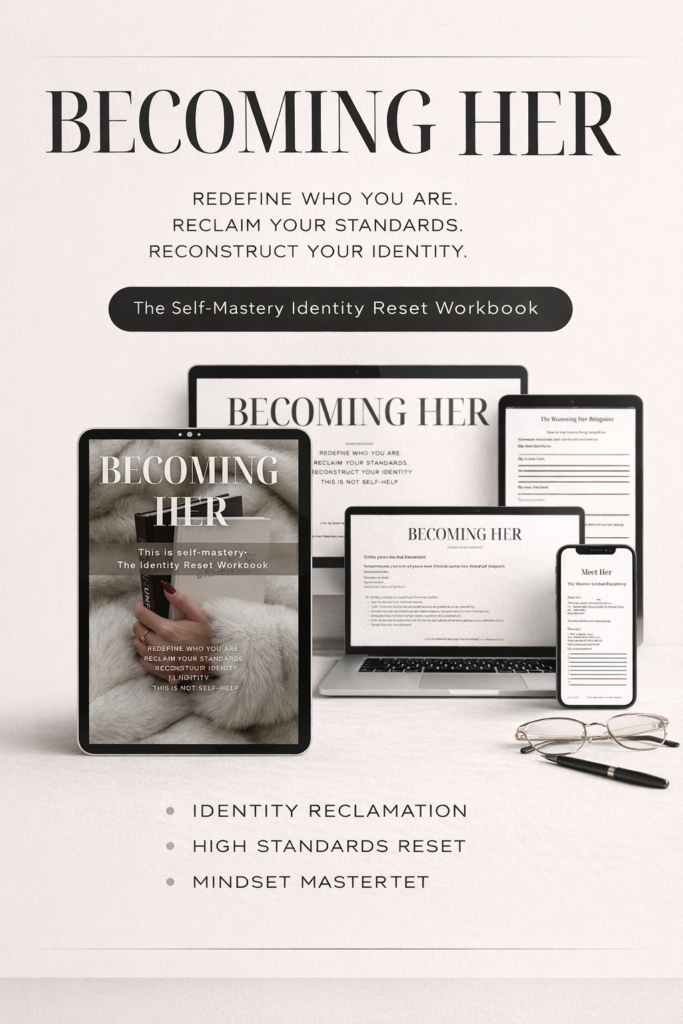
Want to go deeper? Download the The Art of Awareness Journal to work through each question with space for reflection and action steps.
Question 10: What Does My Ideal Day Actually Look Like?
Get specific. Not “a perfect day”—an actual, realistic ideal day. What time do you wake up? What do you do first? How do you work? When do you rest? Who do you spend time with?
Write out your ideal day from morning to night as part of your vision planning process. This reveals what you actually value versus what you think you should value. If your ideal day has zero client calls, that tells you something about your business model.
Your 2026 vision should be building toward more days that look like this.
Question 11: What Would I Regret NOT Doing in 2026?
Flip the question. Instead of asking what you want to do, ask what you’d regret NOT doing. That regret reveals what actually matters.
Would you regret not starting that business? Not having hard conversations? Not prioritizing your health? Not spending time with people you love? Not traveling? Not taking the risk?
Regret is a powerful clarifier. Write down what you’d regret, then make sure your 2026 vision includes addressing those things.
Question 12: What Would I Do If I Knew I Couldn’t Fail?
Remove the fear. Remove the “what ifs.” If failure wasn’t possible, what would you go after in 2026? That bold move you’ve been avoiding? That scary pivot? That big ask?
This question reveals what you actually want but are too afraid to pursue. Often, our biggest visions are hiding behind our biggest fears. Write it down. Then ask: what small step could I take toward this, even if I might fail?
Your 2026 vision should include at least one thing that scares you.
Question 13: What Support Do I Need to Make This Vision Real?
Vision without support is just a fantasy. What do you actually need to make your 2026 vision happen? Accountability? Better systems? Help with childcare? Financial investment? New skills? A community?
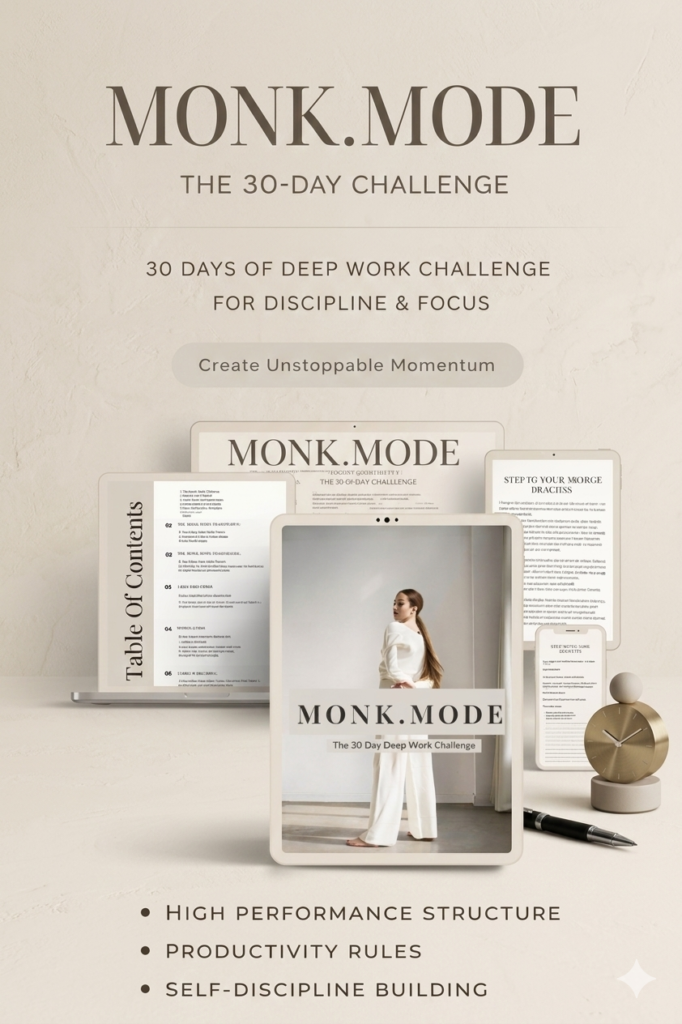
Be specific. If you need help staying focused, my Monk Mode: 30 Day Deep Work Challenge teaches you to eliminate distractions and build unbreakable focus.
Identify the support you need, then build it into your vision planning process. Vision requires infrastructure. If you need a daily structure

This Mindful Morning and Evening Planner keeps you aligned with your vision every single day.
What to Do After You Answer These Vision Planning Questions
Answering these thirteen questions gives you clarity—but clarity without action means your vision planning stops at insight instead of results.
Synthesize your answers into a one-page vision statement. Read through everything you wrote. Pull out the key themes. Write a clear, concise summary of your vision for 2026—who you’re becoming, how you want to feel, what matters most.
Set 3-5 major goals that align with your vision. Not 20 goals. Not a massive list. Just 3-5 significant goals that directly support the vision you defined. Quality over quantity always.
Break those goals into quarterly milestones. What needs to happen in Q1? Q2? Q3? Q4? Map it out so you have a roadmap, not just a destination.
Create systems and habits that support your vision daily. Your vision for 2026 needs to show up in your daily life. What habits, routines, or systems will keep you aligned? Build those immediately.
Need daily motivation? Get the Miracle Mantras Affirmation Card Deck. It features prompts and mantras that align perfectly with these 13 questions—pull one each morning to help you stay focused and inspired on your 2026 vision.
Review your vision monthly. Set a recurring monthly check-in to review your vision, assess progress, and adjust course. Vision work isn’t one-and-done—it’s ongoing.
Why Vision Planning Matters More Than Ever in 2026
2026 can be another year of chasing goals you abandon by March. Or it can be the year you finally build something that actually aligns with who you are and what you value.
The difference is vision. When you’re clear on your vision—on who you’re becoming and why it matters—goals become easier. Decisions become clearer. Focus becomes natural.
You stop second-guessing yourself. You stop comparing yourself to others. You stop feeling scattered and overwhelmed. Because you know where you’re going and why.
These thirteen questions give you that clarity—and form the foundation of intentional vision planning for 2026.
For a complete guide on turning your vision into a visual tool, read my post on How to Create a 2026 Vision Board That Actually Works.
Frequently Asked Questions About Vision Setting
How is creating a vision different from just setting goals?
Goals are specific outcomes you want to achieve (make $100K, lose 20 pounds). while vision planning focuses on the bigger picture of who you’re becoming and how you want your life to feel. Vision provides the why behind your goals. When you have a clear vision, goal-setting becomes much easier because you know what actually aligns with the life you’re building.
Do I need to answer all 13 questions, or can I just pick a few?
You’ll get the most clarity by answering all thirteen, but start with the ones that resonate most. Questions 2, 5, and 7 are particularly powerful if you’re short on time. The more questions you answer honestly, the clearer your vision becomes—and the stronger your vision planning foundation will be. Even answering half is better than skipping the vision work entirely.
What if my vision changes throughout 2026—is that okay?
Absolutely. Vision evolution is growth, not failure. Review these questions quarterly and adjust as you learn more about yourself. Rigid attachment to an outdated vision is just as problematic as having no vision at all. Permit yourself to evolve while staying rooted in your core values.










12 comments
Debbie
These vision planning questions are really helpful. I’m excited to begin mapping out my goals for the year more clearly and with better purpose.
LaniAuthor
Thank you so much Debbie —I’m glad the vision planning questions were helpful! It’s amazing to hear you’re excited to start mapping out your goals with more clarity and purpose. That kind of intentional approach really sets the stage for meaningful progress and lasting results.
Catherine
These are great questions to ask before setting goals. I love to do this. It helps me refine my goals and figure out what I truly want. Great inspiration!
LaniAuthor
Appreciate your feedback Catherine. Reflection always brings so much direction and purpose.
Elaine
Wow, this post really has me rethinking and replanning this year. I am a people pleaser by nature and I think I need to set some new visions for my personal self. Thanks for sharing.
LaniAuthor
Thank you Elaine! Love that you’re turning reflection into action—your new visions will make this year so meaningful.
Phill George
Love the vision-first approach and reflective questions for planning 2026 — it really helps clarify what matters before jumping into goals!
LaniAuthor
Thanks for sharing Phill! Love that the questions helped you focus on what truly matters.
Mary Anne
These are excellent questions and yes, 2025 goals were similar to yours. Lacking intention and a true definition of what I see for myself. I have spent the past 2 months doing some self reflection and working to manifest my goals into reality. I am so excited for 2026 and know that my life goals have direct and purpose! 2026 is going to be filled with expansion and the year for MMW. Such a valuable post for anyone looking for clarity and direction with their goals.
LaniAuthor
So glad this post resonated with you Mary Anne! Excited to see how your focus and intention shape such a powerful year ahead.
Nobsy Francisca
This is so enlightening. I cam totally relate to trying to accomplish a thousand goals and ending up with lots of half-done projects. This year I’m creating daily systems and routines to support my 3 goals.
LaniAuthor
Grateful you found it enlightening—your plan to build routines sounds like the perfect way to move from half-done to fully accomplished.