
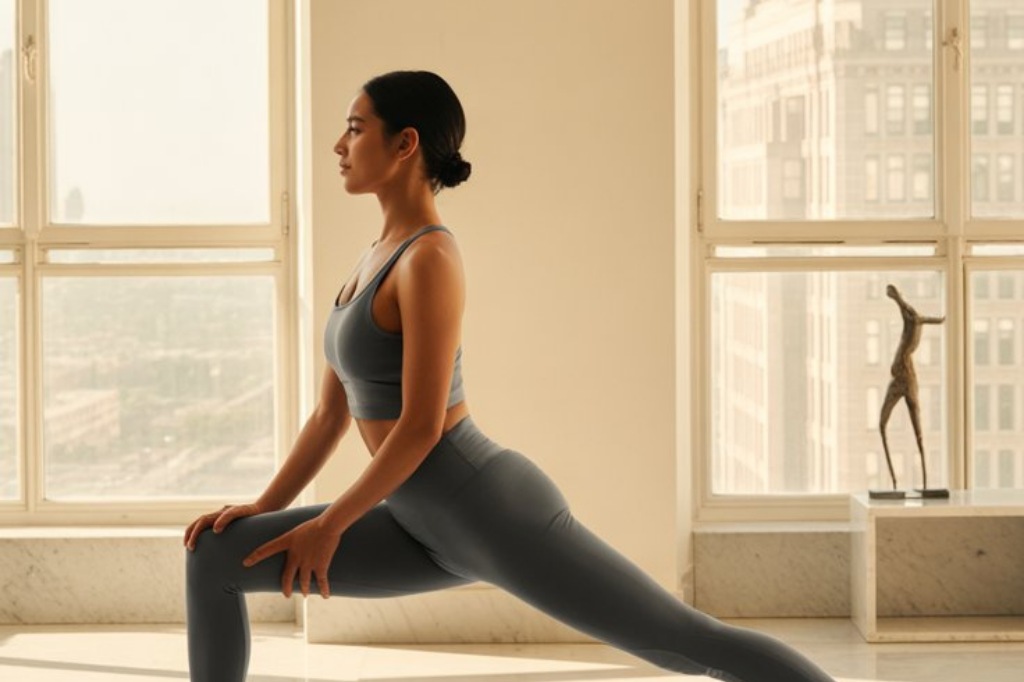
This post contains affiliate links. View the disclosure for more information
Your body was built to move. Your mind was built to follow.
Can we talk about something? The way most of us were introduced to exercise was honestly kind of brutal. Burn this. Earn that. Fix your body. No wonder so many women check out completely — when movement feels like a punishment, it’s hard to show up for it.
I used to skip workouts and feel guilty about it. Then I started moving daily — not intensely, just consistently — and something shifted that I wasn’t expecting. I wasn’t just feeling fitter. I was feeling calmer. Clearer. More like myself. That’s when I realized daily movement wasn’t doing what I thought it was doing.
It turns out the biggest benefits have almost nothing to do with the physical. And once you understand what daily movement is actually doing to your brain, you’ll never think about it the same way again.
Why does daily movement affect a woman’s mental health so dramatically — even when the workout is short?
Daily movement improves mental health because it directly lowers stress hormones, activates the brain’s reward system, and shifts the nervous system out of fight-or-flight — effects that kick in within minutes and build over time. It’s not about how long you move or how hard.
It’s about the signal your body receives when you choose to move consistently. That signal changes everything.
The Real Reason It Works — And It’s Not Endorphins
Here’s something that surprised me when I started researching this: the endorphin explanation is actually the least interesting part of the story. Yes — daily movement releases feel-good chemicals. But that’s just the surface.
The deeper shift is neurological. When you make daily movement a consistent practice, your brain physically changes how it processes stress, regulates emotion, and maintains focus. Research comparing the mental health effects of regular exercise to other interventions found results that most people — and most doctors — are still not talking about loudly enough.
That’s the part nobody puts on fitness posters. Daily movement isn’t just about making you feel good in the moment. It’s quietly rewiring how you handle everything else.
You might also need this:
- 13 Easy Digital Detox Habits That Quietly Transform Everything
- 18 Energy and Mood-Boosting Hacks You Should Try Now
What Daily Movement Is Actually Doing to You
It Brings Your Nervous System Back Online
Daily movement regulates your nervous system by activating the parasympathetic response — the state where your body finally exhales. If you’ve been feeling wired, reactive, or like you can’t properly wind down, this is often why. Moving your body — even gently — gives your system the signal it’s been waiting for. And better sleep follows almost automatically.
It Clears the Mental Fog
Daily movement increases blood flow to the brain and sharpens focus, decision-making, and cognitive clarity. Women who build this habit consistently describe the same thing — a kind of mental brightness that wasn’t there before. Not just during the workout. All day. That clarity is one of daily movement’s least-talked-about and most life-changing side effects.
It Makes You Emotionally Steadier
This one takes a few weeks to notice — but when you do, it’s remarkable. Daily movement trains your brain to process difficult emotions without being overwhelmed by them. The hard conversation doesn’t knock you sideways the way it used to. The stressful week doesn’t derail you completely. You’re not just calmer in the moment — you become a fundamentally calmer person over time.
It Quietly Rebuilds Your Confidence
Every time you show up for your daily movement — even for ten minutes on a hard day — you’re creating evidence that you keep your promises to yourself. That evidence compounds. It changes how you see yourself, how you make decisions, and how you move through the world. Daily movement isn’t just a physical habit. It’s an identity one.

These are the things I actually reach for to make my daily movement habit feel like something I want to do — not something I have to.
What Daily Movement Actually Looks Like in Real Life
This is where the all-or-nothing mindset trips most women up. Daily movement doesn’t mean a full workout every day. It means intentional, consistent physical activity — whatever that looks like in your actual life on your actual schedule.
A 15-minute morning walk before the house wakes up. A midday stretch between tasks. An evening yoga flow. Dancing in your living room to two songs you love. A slow walk after dinner with no destination. All of it counts—every single bit of it.
The sweet spot research points to is around 45 minutes, three to five times a week — but even five to ten minutes of daily movement done consistently produces measurable mental health results. Sustainability always, always beats intensity.
Continue the journey:
- Dance Cardio at Home: Move More, Stress Less, Love Every Minute
- 9 Lazy Morning Workouts in Bed: Boost Energy Before Coffee
The Mistakes That Keep Women Stuck
Waiting to feel motivated before starting. Motivation is a result of daily movement — not a prerequisite for it. Your brain produces the motivation after you begin. Start with two minutes. The rest almost always follows.
Judging it by how your body looks. If that’s your only measure, you’ll miss everything that actually matters. Track how you sleep. How you handle a hard conversation. How do you feel at 3 pm on a Wednesday? The mental results of daily movement show up there first.
Making the bar too high to clear on a bad day. The habit that survives your worst week is the one that changes your life. Not the one that looks impressive on a good one. Make your daily movement so small it’s almost embarrassing — then build from there.
Building a daily movement habit isn’t a fitness problem — it’s a mindset one. The Monk Mode 30 Day Challenge is the commitment framework that helps you eliminate the excuses, protect the habit, and show up for yourself consistently — in movement and in everything else.

The Monk Mode 30 Day Challenge is the structure that turned my daily movement intention into an actual habit. If you’re ready to stop starting over, this is how.
The Woman Who Shows Up for Herself Every Day
She’s not who you think she is. She’s not the one with the perfect athleisure and the 5 am alarm. She’s the one who stretches before bed, takes the long way to her car, and dances in her kitchen because it makes her feel like herself. She moves because she knows how different everything feels when she does.
Daily movement doesn’t ask you to be impressive. It asks you to be consistent. And consistency — quiet, unglamorous, daily consistency — is what actually transforms a life. Not the dramatic overhaul. Not the perfect routine. Just the decision, made again every day, to move your body because you know what it gives back.
Here’s what daily movement actually gives you: a regulated nervous system, a sharper mind, stronger emotional resilience, and daily proof that you can show up for yourself. It doesn’t have to be long, intense, or perfect. It just has to happen — on your terms, in your time, every day.
Daily movement gives you mental clarity. Get Your Life Back: The Focus Reset is where you direct it.

Once my daily movement habit started giving me that mental clarity, I needed somewhere to put it — Get Your Life Back: The Focus Reset is exactly that. It’s how I make sure my clearest hours go toward the work that actually matters.
You don’t need a perfect routine. You just need to move — today, tomorrow, and the day after that. The rest takes care of itself.












8 comments
The Curated Corners . Organic modern home & kitchen inspiration
Exactly what I needed to read today! 🕊️ As someone who prioritizes those daily steps, I can attest to that ‘mental brightness’ it brings.
LaniAuthor
Thank you. I’m glad this post reached you on time and that you enjoyed it.
Karen Kasberg
It truly is amazing what a little bit of movement will do for your mind. The days I am most active are the days I feel my best! Great post!
LaniAuthor
Hi Karen, You are so right- movement does wonders for our mental and emotional well being. I’m glad you enjoyed this post
Riyah
I love this post so much! It’s true that overall moving my body has definitely improved my overall happiness and health. I’ve noticed such a difference even on days where I’m not strength training and I’m just doing something lighter like playing with the baby or indoor yoga. I still still feeling so good.
LaniAuthor
Hi Riyah, I’m so happy to hear you love this post. Movemenst can definitely uplift your mood. Do check out our other related posts – especially the one with gratitude!
Rancy
The need for daily movement is beautifully explained here. It does quietly rewire how we handle things every day.
LaniAuthor
Hi Rancy, I’m glad you enjoyed this post and I hope you got some daily movement ideas going on.