
This post contains affiliate links. View the disclosure for more information
You don’t need to get your old body back. You need to start taking care of the one you have now.
Maybe you haven’t completely “let yourself go.” Maybe life just got busy, your routines changed, and taking care of your body slowly moved further down the list.
That’s usually how it happens. You miss a few workouts, start choosing whatever food is convenient because you’re tired, sleep becomes an afterthought, and one day you realize you don’t feel as strong, energetic, or comfortable in your body as you used to.
I’ve had seasons like this too, and I think one of the hardest parts of getting back in shape isn’t actually exercising. It’s remembering what you used to be capable of and wanting to get back there immediately. But your old fitness level isn’t necessarily the right place to restart.
If you’re wondering how to get back in shape after a long break, the goal isn’t to punish yourself for the months or years you weren’t consistent. It’s to create a way of taking care of your body that you can realistically keep doing.
How Do You Get Back in Shape After a Long Break?
The best way to get back in shape is to start below your previous fitness level and gradually rebuild your strength, cardiovascular fitness, and daily habits. Begin with manageable movement, add strength training, improve the way you eat and sleep, and increase the difficulty as your body adapts.
The CDC recommends that adults eventually work toward at least 150 minutes of moderate-intensity physical activity each week, along with muscle-strengthening activity on two or more days. But if you’ve been inactive, you don’t have to accomplish all of that in your first week. Some physical activity is better than none, and activity can be broken into smaller amounts throughout the week.
The important part: your first few weeks are less about transforming your body and more about rebuilding consistency. Give yourself something you can repeat long enough for the physical results to follow.
9 Realistic Ways to Get Back in Shape After a Long Break
1. Start With the Body You Have Now
This is probably one of the hardest parts of learning how to get back in shape when you’ve been fit before.
You remember the weights you used to lift, how long you could run, what your body looked like, or how easily you could finish a workout. Naturally, you want to start there again. But comparison can make a perfectly good beginning feel inadequate.
Instead, take an honest look at where you are now. Can you comfortably walk for 20 minutes? When was the last time you strength-trained consistently? How is your energy? How are you sleeping? Do you have an old injury or pain that needs to be considered?
Those answers aren’t a judgment on how far you’ve fallen. They’re information. Houston Methodist recommends starting with realistic process-based goals when returning to exercise after a break. That could mean something as simple as walking for 15 minutes several times during the week instead of immediately attempting the routine you used to do.
You’re not trying to prove what your old body could do. You’re giving your current body somewhere to begin.
2. Make Walking Your Easiest Win
If I were trying to get back in shape after a long break, walking would be one of the first things I’d add.
It’s accessible, you don’t need a complicated program, and you can fit it around your actual life. Walk after lunch. Go outside after dinner. Take a longer route when you’re running errands. Put on a podcast and walk for 20 minutes instead of scrolling.
And you don’t have to obsess over hitting 10,000 steps from Day One. You can divide your weekly activity into smaller chunks rather than doing long workouts all at once.
If you currently average very little movement, going from that to regular walks is progress. Start there. You can always walk farther or faster later.
3. Bring Strength Training Back Early
Cardio is usually the first thing we think about when we want to change our bodies, particularly if losing weight is part of the goal. But I wouldn’t build the entire plan around burning calories. I’d want to feel strong again.
Strength training can include free weights, machines, resistance bands, bodyweight exercises, and other forms of resistance exercise. Current physical activity guidelines recommend muscle-strengthening activities involving the major muscle groups at least two days each week.
If you haven’t worked out for a long time, you don’t need five gym sessions to make your comeback official. Two simple full-body strength sessions per week can be a much more realistic place to start. Focus on learning or relearning basic movements and using a level of resistance you can control.
And please don’t judge the quality of your workout by how difficult it is to walk down the stairs the next morning. Being painfully sore isn’t proof that you had a better workout.
4. Stop Treating Food Like Punishment
This is where trying to get back in shape can turn into an all-or-nothing project very quickly.
You decide you want to lose weight, so suddenly bread is the enemy, dinner is tiny, and every food has to pass an imaginary test of whether it’s “good” or “bad.” I’d rather ask a more useful question: What could I add that would make the way I eat better?
Maybe you need more protein at your meals. Maybe you barely eat vegetables anymore. Maybe you need to drink more water, cook at home more often, or simply have decent food available before you get so hungry that convenience wins.
If losing body fat is one of your goals, what and how much you eat will matter. But you don’t need to hate the way you eat in order to improve it.
And exercise still matters even when your body weight doesn’t change immediately. Physical activity has health benefits that extend beyond weight loss. That’s worth remembering when your body is becoming stronger, but the scale hasn’t caught up yet.
5. Make Your Routine Almost Too Easy at First
One mistake I’ve made before is creating a routine for my most motivated self.
That woman has plenty of time. She sleeps eight hours. She meal preps. She never gets unexpected work. Apparently, nobody in her family ever needs anything from her. She’s wonderful. She is also not available every day.
If you want to know how to get back in shape and actually stay consistent, build your routine around your normal life—not the fantasy version where everything goes according to plan. If you realistically have 30 minutes, build around 30 minutes.
If mornings are chaotic, stop telling yourself you have to become a 5 a.m. gym person because somebody online told you successful women wake up before sunrise. Your workout needs to fit into your life before it can change your life.
Make your beginning easy enough to repeat. You can make it harder later.
6. Give Recovery the Same Respect as Exercise
When you’re excited about seeing results, rest can feel like doing nothing. But training is only part of the equation.
Your body also needs time to recover from what you’re asking it to do. Houston Methodist recommends paying attention to recovery when returning to exercise, including gradually increasing activity rather than trying to make up for the time you were inactive.
Sleep belongs in this conversation too. You can have the perfect workout schedule saved on your phone, but if you’re exhausted all the time, everything becomes harder—training, food choices, motivation, energy, and recovery.
Getting back in shape isn’t only about what happens during the workout. Sometimes one of the most useful things you can do for tomorrow’s workout is go to bed.
7. Stop Waiting Until You Feel Motivated
Motivation is wonderful when it shows up. I just wouldn’t build my entire fitness routine around it.
Some days you’ll genuinely want to exercise. Other days, your workout will be the last thing you feel like doing. This is where having a minimum version of your routine can help.
Maybe your normal workout is 40 minutes, but on a difficult day you do 15. Maybe you planned to go to the gym but the day gets away from you, so you take a walk instead.
Doing less isn’t the same as doing nothing. One imperfect workout doesn’t ruin your progress any more than one perfect workout creates it. The routine becomes part of your life when you stop needing every day to feel ideal.
8. Track More Than Your Weight
If the only proof you accept that your plan is working is a smaller number on the scale, you can miss a lot of evidence. Pay attention to what else is changing.
Maybe you can walk farther without getting tired. Your weights are getting heavier. Your clothes sit differently. You’re sleeping better. You have more energy in the afternoon. You recover faster. You’re no longer spending an hour negotiating with yourself before exercising.
Those things count. I especially like tracking strength because it gives you something your body can do, rather than only something you want it to look like.
The scale can be one piece of information if you choose to use it. It doesn’t have to be the entire story.
9. Become Someone Who Takes Care of Her Body Again
This is the part I think we underestimate when we’re figuring out how to get back in shape. It isn’t only a physical project. There’s an identity shift underneath it.
At some point, you stop being someone who constantly tries to get back into working out and become someone who moves her body because taking care of herself is simply what she does.
You buy groceries with that woman in mind. You protect time for her workouts. You take the walk even when it isn’t exciting. You go to bed because tomorrow matters too.
And every time you follow through, you collect a little more evidence that this is who you are now. You don’t have to wait until your body looks different to become her.
If taking care of your body is only one part of the life you’re ready to change, Start Your Second Life

Fitness Essentials That Can Make Starting Again Easier
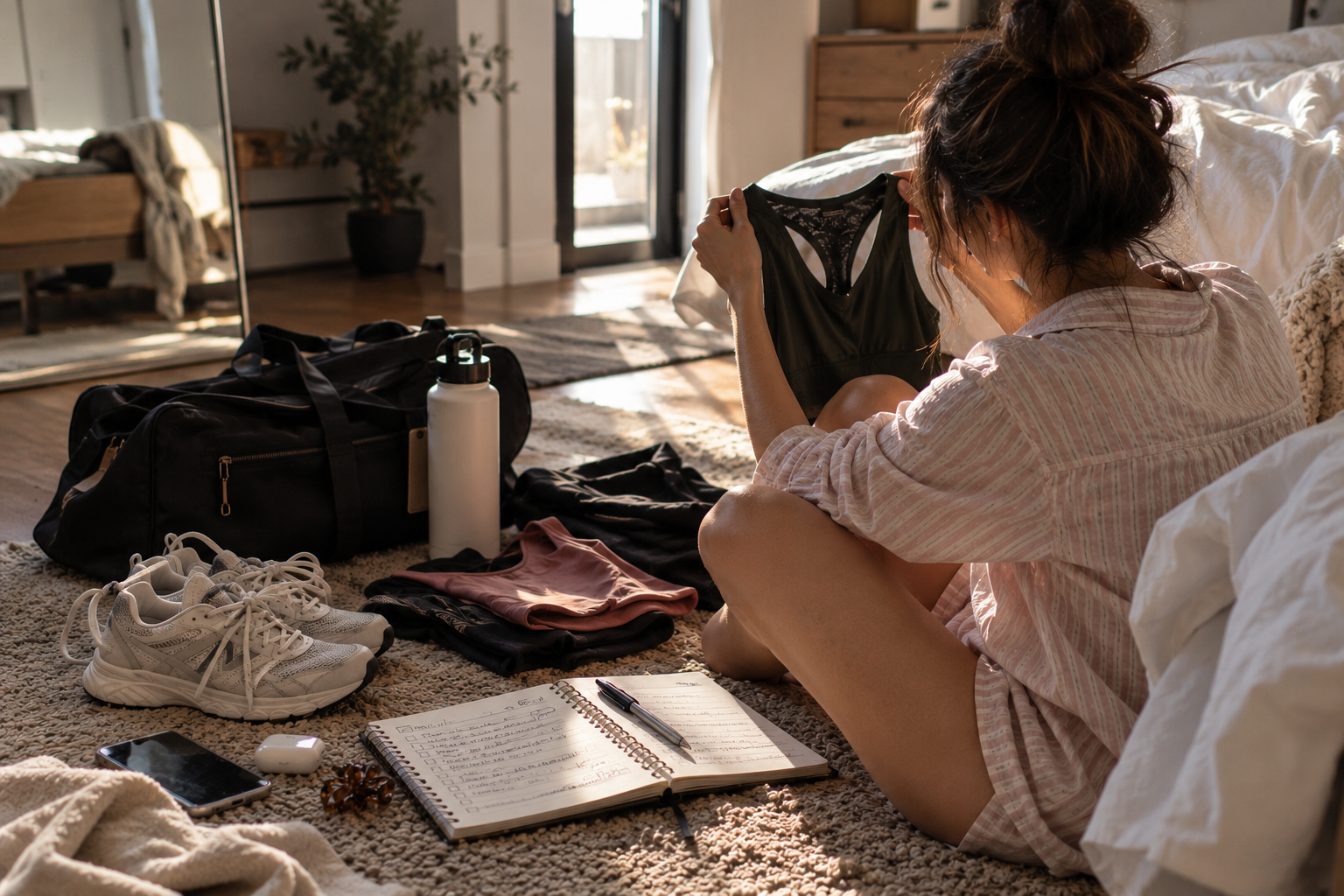
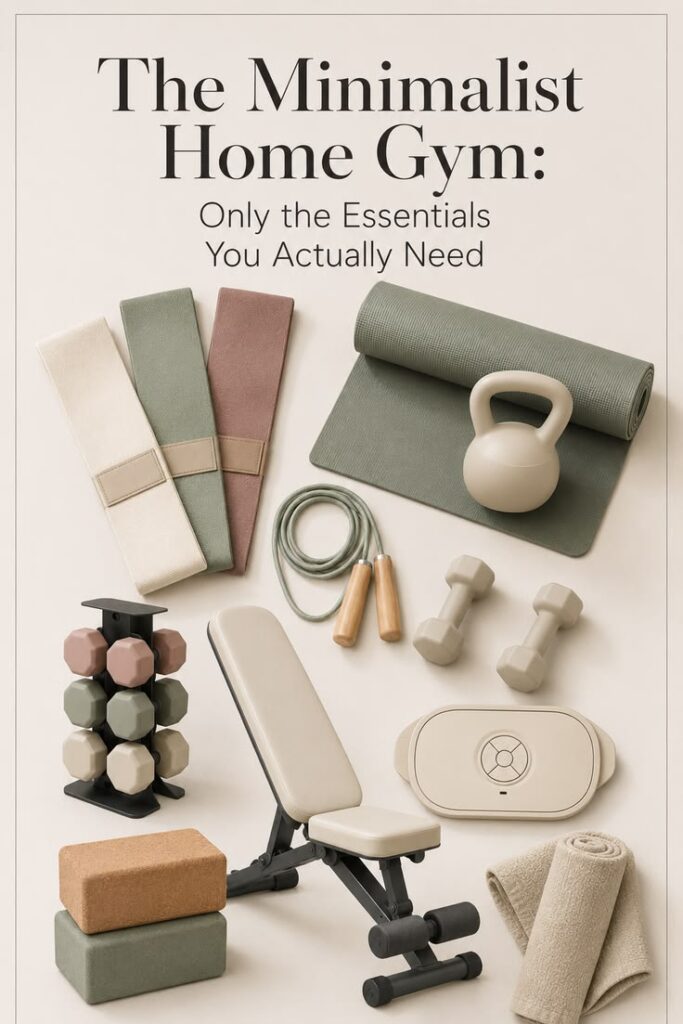
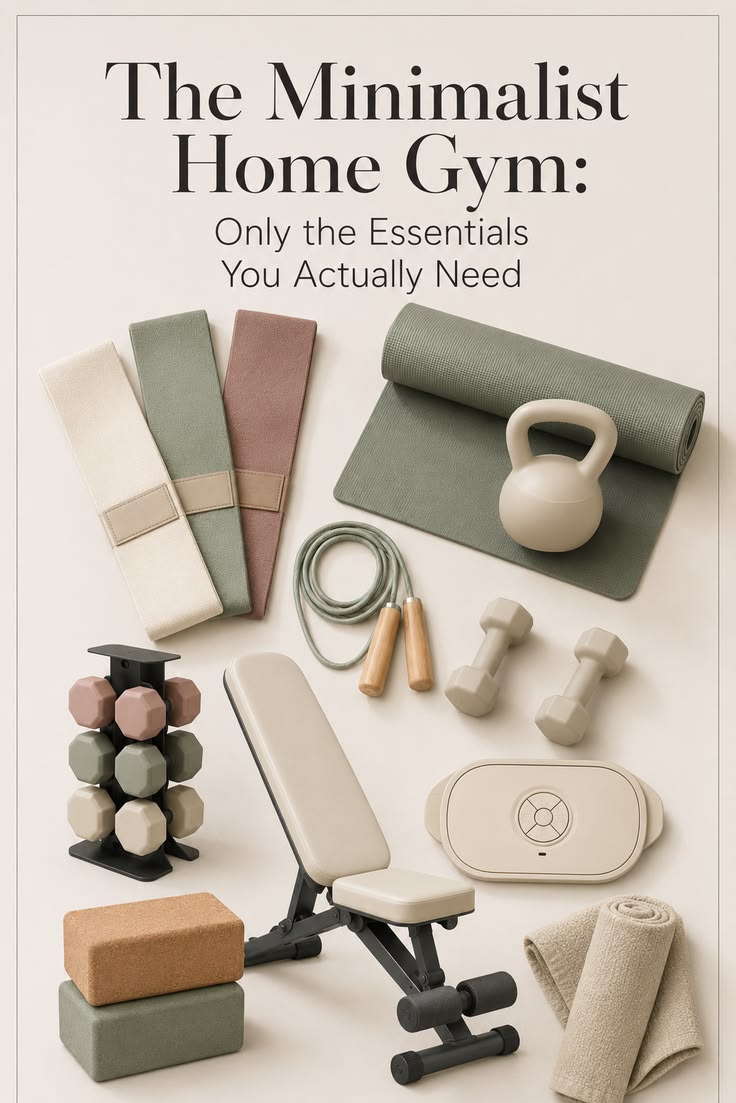
You absolutely do not need to buy a completely new fitness wardrobe or turn one corner of your house into a home gym before you can start exercising again. But there are a few things that can make returning to a routine easier and more enjoyable.
A supportive pair of walking shoes. If walking is going to become part of your daily routine, comfortable shoes are one of the few things I think are genuinely worth prioritizing.
Resistance bands. They take up almost no room, travel easily, and give you plenty of options for at-home strength workouts.
A comfortable exercise mat. Useful for mobility work, stretching, core exercises, yoga, and home strength sessions.
Adjustable dumbbells. If you prefer exercising at home and plan to continue strength training, adjustable weights let you progress without buying an entire rack of dumbbells.
A large reusable water bottle. Not glamorous, but having water beside you throughout the day makes remembering to drink it considerably easier.
A fitness tracker or smartwatch. You don’t need one, but if seeing your walks, workouts, sleep, or activity motivates you, a tracker can make your progress more visible.
A walking pad. This is more of an investment, but it can be useful if weather, work, or your schedule regularly makes outdoor walks difficult.
One Last Thought
Maybe learning how to get back in shape isn’t really about getting your old body back. Your life may be different now. Your schedule may be different. Your priorities might be different too.
So instead of trying to recreate the woman you were five or ten years ago, you get to decide what taking care of yourself looks like now. Start with the walk. Lift the lighter weight. Make the better breakfast. Go to bed a little earlier. Come back tomorrow.
None of those things look particularly dramatic on their own. But keep collecting them and eventually you may realize that the biggest change wasn’t just getting fitter. You became someone who takes care of herself again.
Frequently Asked Questions
How long does it take to get back in shape?
There isn’t one timeline that applies to everyone. Your starting fitness level, how long you’ve been inactive, previous training experience, age, health, recovery, and the type of exercise you’re doing can all affect your progress.
Instead of setting an arbitrary deadline, look for improvements in strength, endurance, energy, consistency, and how you feel over several weeks and months.
What is the fastest way to get back in shape after a long break?
The fastest approach isn’t necessarily the most aggressive one. A better strategy is to begin with an amount of exercise you can recover from and repeat, then gradually increase your duration, resistance, or intensity as your fitness improves.
Starting too hard can leave you excessively sore or make the routine difficult to sustain.
Is walking enough when you’re just starting?
Walking can be an excellent starting point, particularly if you’ve been inactive. As your fitness improves, you can increase your pace or duration and gradually add strength training and other activities.
Should I do cardio or weights to get back in shape?
Ideally, your routine can eventually include both. Aerobic activity supports cardiovascular fitness, while resistance training improves muscular strength. Current physical activity guidelines for adults include both aerobic exercise and muscle-strengthening activity.
What if I haven’t exercised in years?
Start gradually and choose activities appropriate for your current ability.
If you have a chronic medical condition, an injury, symptoms during exercise, or concerns about whether exercise is safe for you, speak with an appropriate healthcare professional before beginning or substantially increasing your activity.










Add comment