

A vision board without intention is just wall décor
Three years ago, I spent an entire Sunday afternoon creating the “perfect” vision board.
I printed beautiful images from Pinterest: a luxury home, a jet-setting girl boss with a shiny black car and stacks of money, a health-and-wellness lifestyle—a fit body, a dream life. I arranged everything just right—on a corkboard, my laptop background, and even my phone screen. After all, the rule says you need to see it everywhere.
You know what happened?
Nothing. Absolutely nothing.
I looked at it every morning for about two weeks. Then it faded into the background—just pretty pictures on my wall with zero connection to my real life. By April, I’d completely forgotten it existed.
Why?
Because I did what most people do, I created a vision board based on what I thought looked good. There was no strategy. No clarity. No connection to real, measurable goals.
Last year, I tried again—but this time, I approached my 2025 vision board completely differently. Not as a craft project. Not as Pinterest-worthy décor. But as a strategic tool designed to drive action.
And for the first time?
It worked.
My business grew. I hit income goals I’d been chasing for years. I felt more focused, aligned, and intentional than ever before—not because the vision board was magic, but because it was built with purpose and tied to a real plan.
So what makes a vision board actually work instead of becoming wall décor you ignore by February?
The difference isn’t in the pictures.
It’s in how you create it—and what you do with it afterward.
What Is a Vision Board (And Why Most People Get It Wrong)
A vision board is a visual representation of your goals and desires for the future. At its core, it’s a tool to help you clarify what you want and keep those goals front of mind. But here’s where most people mess up.
They treat a vision board like a wish list. They slap random pretty images on a board without any thought about what they actually mean or how they connect to real life. According to Forbes The Power Of Visualization And How To Use It, visualization only works when it’s paired with concrete action plans—not just passive daydreaming.
A vision board that actually works isn’t about pretty pictures. It’s about clarity, strategy, and daily alignment with your real goals. It’s a tool that helps you make decisions, stay motivated, and take action—not just dream.
For 2026, your vision board needs to be different. It needs to be specific, actionable, and deeply connected to who you actually are and what you genuinely want—not what Instagram says you should want.
Why Vision Boards Fail (And How to Make Yours Different)
Vision boards fail for three main reasons. First, they’re too vague. “More money” or “better health” aren’t goals—they’re wishes. Without specificity, your brain has no idea what to actually work toward.
Second, they’re not connected to action. You make the board, hang it up, and then… nothing. No plan. No next steps. Just hoping the universe delivers while you scroll TikTok.
Third, they’re inauthentic. You put images on your board because they look aspirational, not because they reflect what you genuinely want. That disconnect kills motivation fast.
A vision board that actually works for 2026 needs to be specific (clear, defined goals with real outcomes), action-oriented (connected to a plan you’ll actually follow), time-bound and attainable (not some vague “someday”), and authentic (rooted in your values and desires, not societal expectations).
This is where most people need to do inner work first. If you’re not clear on what you actually value and want, my post on 9 Essential Steps to Living Your Authentic Truth will help you get aligned before you start cutting out pictures.
8 Steps to Create a Vision Board for 2026 That Actually Works
1. Get Brutally Honest About What You Actually Want
Before you touch scissors or copy and paste from Pinterest, sit with a journal. Ask yourself: If no one ever saw my life, what would I want it to look like? Not what looks impressive. Not what your family expects. What do YOU genuinely want?
Write freely for 20 minutes. Don’t edit yourself. Don’t judge. Just write. This clarity work is more important than the actual board.
Need help getting clear on your vision? Read this: 16 Easy Steps to Craft a Purpose-Driven Lifestyle You’ll Thrive In
2. Break Your Vision Into Specific Categories
Don’t just throw random goals on a board. A vision board that works is organized with intention.
Start by breaking your vision into clear life categories. I use:
Business/Career, Financial, Health & Wellness, Relationships, Personal Growth, Lifestyle/Home, and Spiritual & Mental Health.
For each category, get specific.
Not “make more money” — “reach $10K in monthly revenue by June.”
Not “get healthy” — “work out four times a week and meal prep every Sunday.”
Specificity is what turns a vision board from inspiration into action.
This is also where catchy, uplifting text and intentional quotes matter. Instead of generic Pinterest phrases, use words that reinforce exactly what you’re building and why it matters to you. The right phrase can anchor your focus, remind you of your “why,” and keep your goals front of mind—especially on the days motivation dips.
That’s why I created my Vision Board Printable Bundle—with category-based prompts, intentional affirmations, and clean, modern text that aligns with real goals and real timelines. It helps you stay focused, aligned, and actually connected to what you’re working toward in 2026—without the overwhelm.
3. Choose Images That Represent Feelings, Not Just Things
This is where most people go wrong. They pick images of fancy cars and designer bags without asking: Why do I want this? What feeling am I actually chasing?
If you want a luxury car, what you probably actually want is freedom, status, or the feeling of “I made it.” Find images that represent THAT feeling. Maybe it’s an open road. Maybe it’s a confident woman. The feeling matters more than the thing.
4. Include Action Steps, Not Just Dreams
Here’s what makes a 2026 vision board different: you include the HOW, not just the WHAT. Next to your $10K monthly revenue goal, add action steps: “Launch group program. Post on LinkedIn 3x weekly. Guest on 2 podcasts monthly.”
This transforms your vision board from a wish list into a strategy document. You’re not just dreaming—you’re planning.
5. Use Words and Affirmations That Resonate
Don’t just use images. Add powerful words and affirmations that align with your vision for 2026. “I am building a business that supports my life.” “I protect my peace daily.” “I finish what I start.”
Words anchor your vision in your subconscious. They reinforce who you’re becoming, not just what you’re getting.
6. Make It Visible and Unavoidable
Your vision board for 2026 needs to be somewhere you see it EVERY SINGLE DAY. Not tucked in a closet. Not hidden behind your door. Somewhere unavoidable.
Mine lives on my computer, laptop, and phone screens—so I see it constantly during my workday. Some women frame theirs in their bedroom or office. Others keep a printed version somewhere they’ll see it every morning. However you choose to display it, placement matters. Out of sight equals out of mind.
7. Connect It to Your Daily Planning
This is the secret most people miss. Your vision board needs to connect to your daily actions. Every Sunday, I review my vision board and plan my week based on what moves me closer to those goals.
If financial freedom is on my board, I schedule revenue-generating activities. If health is on my board, I block workout times. The vision board informs the calendar—that’s when it becomes powerful.
For daily planning that keeps you aligned with your vision, check out my
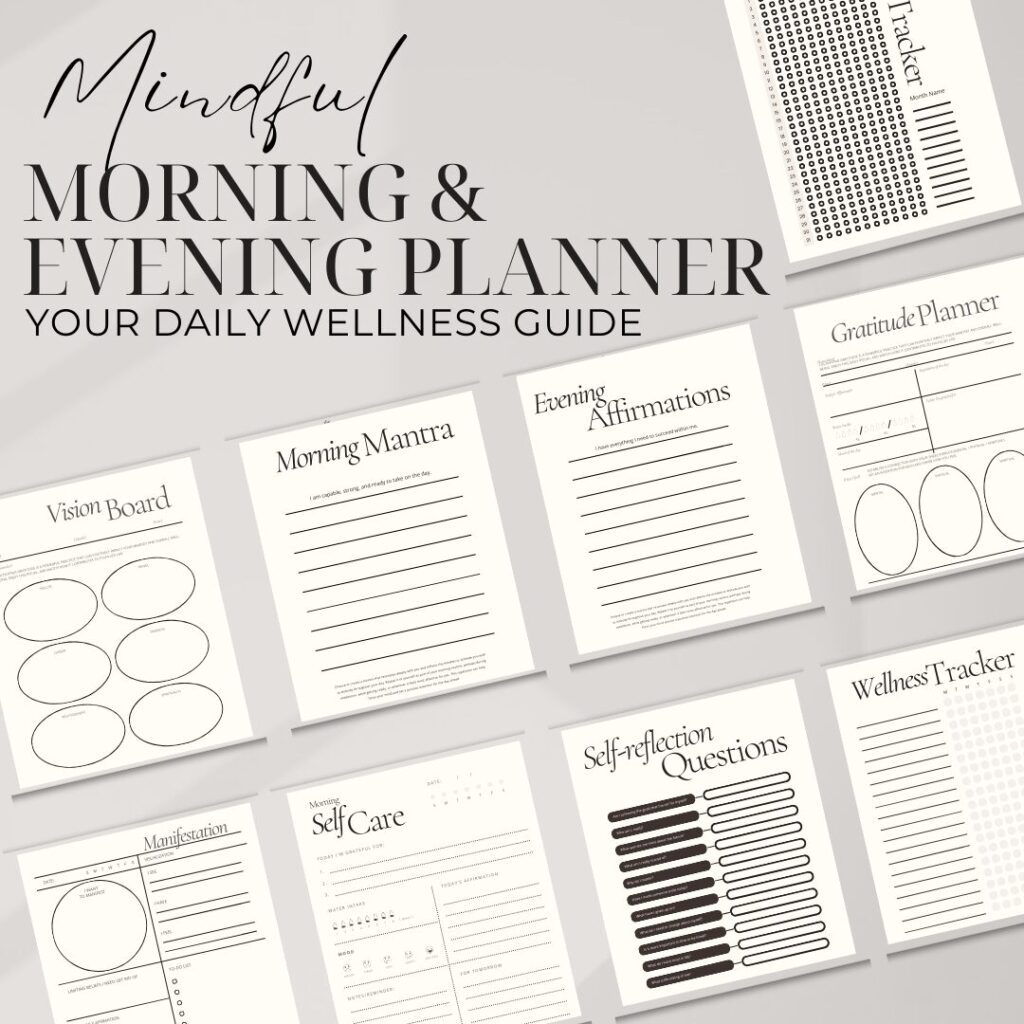
Mindful Morning and Evening Planner. Set intentions every morning based on your vision board goals. Reflect every evening on your progress. Your daily system to turn vision into reality.
8. Review and Revise Quarterly
Your vision for 2026 might shift as you grow. That’s not failure—that’s evolution. Every six months, review your vision board. What’s still true? What’s changed? What needs to be added or removed?
I do vision board audits. Sometimes I add new goals. Sometimes I realize something I thought I wanted doesn’t actually align with my values anymore. That’s growth. Honor it.
Digital vs. Physical Vision Board: Which Works Better?
Both can work. It depends on your lifestyle. Physical vision boards are tactile and satisfying to create. You can touch them, rearrange them, and add to them easily. They work well if you have a dedicated workspace.
Digital vision boards are portable. You can have them on your phone, computer, tablet—wherever you need them. Apps like Canva, Pinterest, or even a simple Google Slides work. They’re easy to update and always accessible.
Choose what works for YOUR life, not what looks best on Pinterest.
What to Do After You Create Your Vision Board
Creating your vision board for 2026 is step one. What you do next determines whether it works or becomes forgotten wall art. Here’s what to do.
Daily: Spend 2 minutes looking at your board every morning. Visualize yourself living that life. Feel the feelings. Then ask: what one action today moves me closer?
Weekly: Review your board during Sunday planning. Choose 2-3 vision-aligned goals to focus on this week. Block time in your calendar for actions that support your vision.
Monthly: Check progress. Are you actually moving toward your vision? If not, what needs to change? Adjust your approach, not just your board.
Quarterly: Do a full vision board audit. What’s working? What’s not? What needs to evolve? Update accordingly.
If you want a deeper breakdown of the visualization and manifestation side of vision boards, I shared that in a previous post: 9 Proven Steps to Create a Vision Board That Manifests Your Wildest Dreams. This post builds on that foundation—but adds strategy, structure, and execution.
Common Vision Board Mistakes to Avoid
Mistake 1: Making it too pretty and not practical enough. Your board should be functional first, aesthetic second.
Mistake 2: Including goals you don’t actually want but think you should. If it doesn’t light you up, it doesn’t belong on your board.
Mistake 3: Creating it once and never looking at it again. A vision board only works if you engage with it regularly.
Mistake 4: Not connecting it to actual action plans. Dreams without strategy stay dreams. Your board needs to be paired with a plan.
Mistake 5: Being too general. “Be happy” isn’t a goal. “Practice gratitude daily and maintain 3 close friendships” is.
Why Your 2026 Vision Board Matters More Than Ever
2026 is your year to stop half-finishing goals and start finishing strong. To stop living reactively and start living intentionally. To stop chasing other people’s definitions of success and start building your own.
Your vision board for 2026 isn’t just pictures on a board. It’s a commitment to yourself. It’s a daily reminder of who you’re becoming and what you’re building. It’s a tool that keeps you aligned when life gets chaotic.
Create it with intention. Use it consistently. Pair it with action. That’s how a vision board actually works—not as magic, but as a strategic tool that supports the life you’re actively building.
For more on designing your entire year with purpose (not just a vision board), read my post on How Intentional Living Stops Self-Sabotage and Helps You Finish Strong in 2026.
Frequently Asked Questions About Vision Boards
Do vision boards actually work, or are they just woo-woo manifestation nonsense?
Vision boards work when used correctly—as a clarity and focus tool, not a magic wish list. Research shows that visualization paired with action significantly increases goal achievement. The board itself doesn’t manifest anything, but it helps you clarify what you want, stay focused, and make decisions aligned with your goals.
How often should I look at my vision board for it to actually work?
Daily is ideal—even just 2 minutes each morning. Weekly minimum if daily feels overwhelming. The key is regular engagement, not just creating it and forgetting it exists. Your brain needs consistent reminders to keep your goals top of mind and influence your daily decisions.










Add comment