

This post contains affiliate links. View the disclosure for more information
To choose, or to be chosen. Most women were only taught one
She does everything right. She shows up, follows through, fills the gaps before anyone has to ask. She makes herself easy to be around — and keeps agreeing to things she doesn’t actually want.
From the outside, her life looks generous. On the inside, she’s quietly disappearing. She doesn’t know how to stop.
Here’s what nobody talks about: most women don’t have a discipline problem. They have a choice problem. To choose yourself has felt dangerous for so long that choosing everyone else became automatic — not kind, not noble, just automatic.
I spent years being the woman who never made things complicated. I said yes out of habit, showed up out of obligation, and stayed small to keep everyone comfortable. I thought I was being generous. I was just gone.
The cost showed up slowly. Less in resentment, more in the quiet disappearance of my own preferences. I stopped knowing what I wanted because I’d stopped asking.
Choosing yourself first sounds simple. In practice, it’s one of the harder things a woman can decide to do. She has to do it while the guilt is still there, before it’s comfortable, before anyone gives her permission.
That permission isn’t coming from outside. This is it.
Why It Feels Wrong to Choose Yourself First
Women get trained early to read the room before reading themselves. Say yes first, figure out the cost later. Be agreeable, be accommodating, be the one who makes things easier for everyone else. Do that long enough, and choosing yourself starts to feel like breaking an agreement you don’t even remember signing.
The psychology of guilt around self-prioritization is well-documented. Women consistently report that choosing themselves produces more guilt than choosing others, even when it’s the more rational and sustainable call. That guilt is not a signal that you’re doing something wrong. It’s a signal that you’re breaking a pattern that has been running for years.
The discomfort fades with repetition. It does not fade with permission. Waiting until choosing yourself feels okay means waiting indefinitely, because the feeling doesn’t arrive before the action. It arrives because of it.
Choosing yourself is a practice, not a milestone. You don’t arrive there and stay. You make the choice, then you make it again tomorrow, and the time after that gets a little easier.
6 Ways to Choose Yourself First
1. Say no without the essay attached
A no that comes with three paragraphs of justification is an invitation to negotiate. The moment you explain, you’ve implied that your no needs to be good enough to earn approval — and then you’re back in the same loop, where choosing yourself is only valid if someone else decides it is.
To choose yourself here means stating the no and stopping. One sentence. Not cold, not apologetic, just clear. “That doesn’t work for me.” The silence that follows is not your responsibility to fill, and the other person’s comfort with your boundary is not the standard your boundary has to meet.
The people-pleasing pattern runs the same way across every area it shows up — it is the habit of managing everyone else’s reaction to your existence before you’ve registered your own. Saying no without an explanation can start interrupting it.
2. Protect one hour a day that belongs to you
Not the hour left over after everything else is handled. An hour you choose on purpose, the same way you’d choose a work commitment or a school pickup — in the calendar, non-negotiable, not up for reallocation when the day gets heavy.
Most women stall here. They wait for a gap in the schedule rather than creating one, and the gap never comes. The hour has to be chosen before the day has a chance to fill itself with other people’s priorities.
The way you start your morning determines whether that hour gets protected or swallowed. Protect it the same way you protect a soft life — with intention, not just good intentions.
3. Let someone be disappointed in you
This is the one that stops most women. You can practice saying no, you can protect your hour, but the moment you see someone’s face change, the old pull comes back hard.
Someone will be disappointed when you start choosing yourself over their expectations. That disappointment doesn’t mean you made the wrong call. It’s evidence that they expected you to say yes again — and those are completely different things. Managing their disappointment is not the same as being wrong, and it isn’t your job in either case.
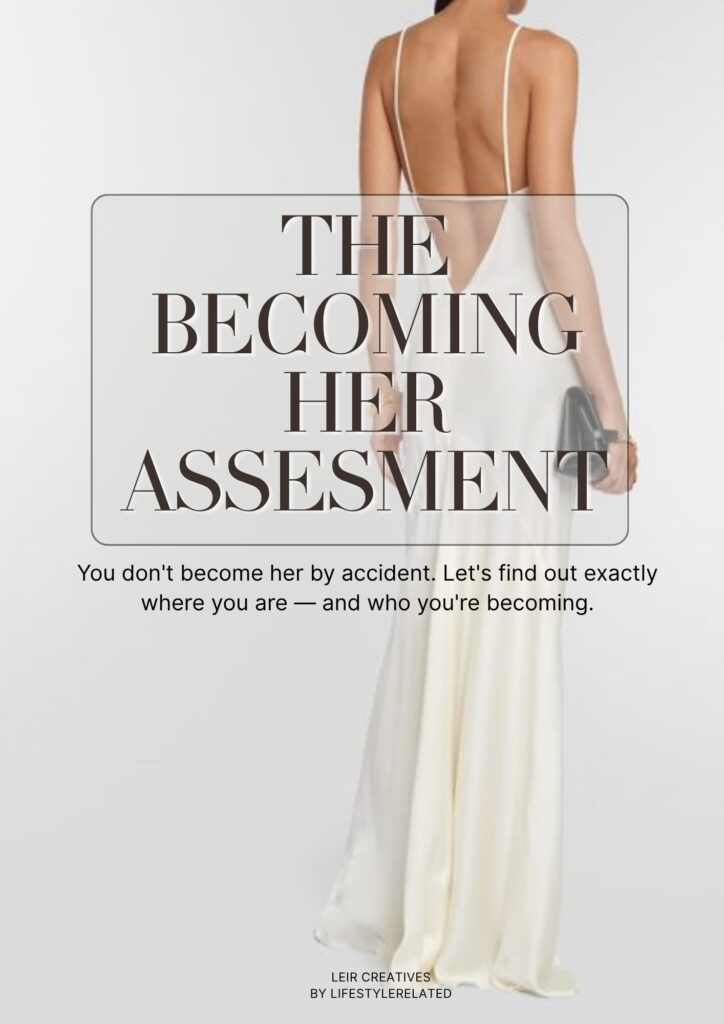
It gets easier to choose yourself when you know who you’re actually choosing. The Becoming Her Identity Reset Workbook is built for exactly this — 15 questions that make it concrete, so you’re not choosing some vague future version of yourself but a specific woman with specific values.
4. Ask what you want before you check what’s expected
The order matters more than the question. Check expectations first, and you’ll rationalize yourself out of your own preference before you’ve fully registered what it is. The expectation comes in and immediately drowns out the quieter signal.
Ask yourself what you actually want. Name it, even just internally. Then check it against what’s expected. You won’t always choose your preference — sometimes the practical call or the kind call wins, and that’s a real choice you made with full information. But choosing yourself requires knowing what you’re choosing between, and most women skip the first step entirely.
A guided journal slows down a process that usually happens in seconds. Getting the question on paper before you answer it creates the pause where your real answer has room to surface. Most women have never sat with “what do I actually want here” long enough to hear themselves respond.
5. Stop explaining choices that don’t need permission
What you eat. How do you spend a free evening? Who you keep in your life and who you don’t. These are not open for committee review — and every time you explain them to someone who didn’t ask, you’re treating your own choices as provisional until someone confirms they’re acceptable.
To choose yourself includes deciding which choices belong to you alone. The explanation habit trains you to submit your choices for approval before you’ve even made them. Dropping the explanation is the practice of approving them yourself.
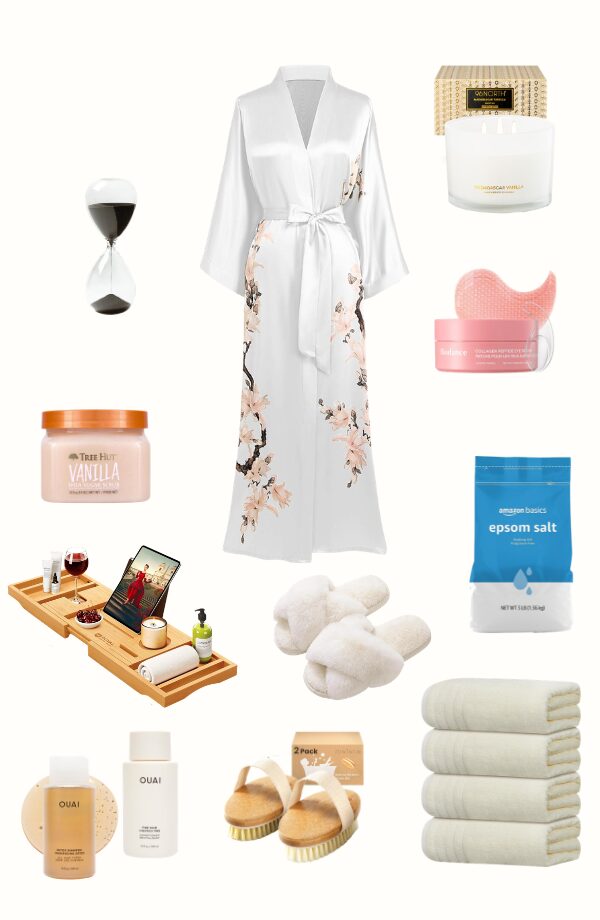
The same shift shows up in how you treat your body once you stop making it earn basic care first. You stop justifying why you need the rest, why you’re skipping plans, why you’re making a different call this time. You just make the call. A candle, a cup of tea, the hour you set aside — none of it requires defense. You take it because it’s yours.
6. Check in with yourself before you check in with everyone else
Most women start the day already responding to other people. Phone first, messages first, the needs of the household first. By the time there’s a quiet moment, the day has already decided what it wants from you — and you’ve already agreed to all of it.
Choosing yourself includes choosing what gets your attention first. Five minutes before you open anything, before you speak to anyone, before the day makes its demands — ask yourself how you actually are. Not how you should be. Not how you’ll need to be to get through what’s coming. How you are right now, in this body, on this morning.
This sounds small because it is small. That’s also why it works. The woman who checks in with herself daily builds a relationship with herself the same way she’d build one with anyone she cares about — through consistency, through showing up, through not waiting until there’s a crisis to pay attention.
A bath ritual, a good soak before the house wakes up, a candle lit for no reason other than it makes the room feel like yours — that’s not indulgence. That’s the foundation that makes the rest of the choosing possible. You cannot pour from a woman who never fills up.
Choosing yourself once is an act. Choosing yourself every morning is an identity.
What Changes When You Choose Yourself
The first thing that shifts is not your circumstances. It’s your relationship with yourself.
When you choose yourself consistently, you stop feeling like a supporting character in your own story. The resentment that builds when you give everything to everyone else — that’s not really about them. It’s about the choice you keep making. When you take responsibility for choosing differently, the resentment has nowhere to land.
She isn’t chosen last because she matters less. She’s chosen last because she never practiced going first. Every woman who has come out the other side of chronic over-giving did it the same way — by choosing herself before it felt comfortable, before the guilt was gone, before anyone told her she was allowed.
Choose yourself first. Especially when it feels selfish. Especially when someone’s disappointed. Especially when nobody ever taught you it was an option.
Read next:











4 comments
Karen Kasberg
My younger self needed to read this post. I’ve finally learned how to prioritize my own needs without feeling guilty or having to explain myself. Great advice!
LaniAuthor
Thank you so much! It takes a lot of growth to reach that point, and I’m so glad this resonated with your journey. Prioritizing yourself without the guilt is a true superpower.
Tracy McHugh
Great post! I LOVED the ‘say no without the essay attached’! Great reminders.
LaniAuthor
Thank you so much Tracy! I’m thrilled that “saying no without the essay attached” resonated with you. It’s such a simple shift that makes a massive difference in protecting our peace and energy.
If you loved those reminders, feel free to browse around the blog for similar posts.