

Overwhelm doesn’t come from having too much to do—it comes from not knowing what to do first
Working solo sounds like the dream, right? You get to be your own boss, create your own schedule, and shape your own destiny.
But anyone who’s tried it knows the truth: independence is a double-edged sword.
Without the structure of a company or the support of a team, the weight of every task and decision falls on your shoulders. The freedom is exhilarating—but it can also be exhausting.
That’s where the right mindset shifts make all the difference. By learning practical mindset shifts, you can reduce overwhelm, find clarity, and start thriving as a solo worker instead of just surviving.
Why Mindset Shifts Are Important When Working Solo?
Because the difference between burning out and thriving as a solo worker isn’t about working harder—it’s about shifting your mindset.
Your habits create your outcomes, but your mindset shapes your entire approach.
When you adjust how you think, you unlock better focus, resilience, and growth instead of staying stuck in survival mode.
9 Mindset Shifts Every Solo Worker Needs to Thrive
1. From Firefighting to CEO Thinking
When you’re solo, it’s easy to fall into the trap of reacting to everything—emails, client requests, urgent tasks—like you’re constantly putting out fires.
The mindset shift here is to stop working in your business and start working on it.
How to apply it:
- Adopt the Clarity Grid: Map tasks into four quadrants—Urgent/Important, Not Urgent/Important, Urgent/Not Important, Not Urgent/Not Important. Spend more energy on the “Not Urgent/Important” zone—this is where long-term growth lives.
- Switch from “to-do” to “to-focus”: Instead of tackling 20 random tasks, pick the 1–3 things that will actually move the needle today.
- Think like a CEO: Schedule not only client work, but also strategy, rest, and personal development.
This shift is about pulling back from reactive work and focusing on strategy. If you’re craving space to think big and reset your energy, consider exploring a wellness retreat.
2. From Perfection Paralysis to Progress Momentum
Perfection is a productivity killer. It keeps you polishing, second-guessing, and stalling. The truth? Done is better than perfect, and forward motion is what builds confidence.
How to apply it:
- Reframe failure as feedback: A proposal rejection or a missed deadline isn’t proof you’re failing—it’s data you can use to improve.
- Celebrate small wins: Each time you finish something, you get a dopamine hit. Use micro-tasks to keep yourself motivated and build momentum.
- Practice self-compassion: Be as kind to yourself as you would to a colleague or friend. Progress thrives in kindness, not self-criticism.
3. From Isolation to Intentional Connection
“Solo” doesn’t have to mean “alone.” Humans are wired for connection, and when you cut yourself off from support, overwhelm creeps in fast.
How to apply it:
- Build your “solo team”: A mentor, a peer group, a VA, or even a therapist can help lighten your load and provide perspective.
- Set digital boundaries: Protect your focus by taming notifications and scheduling time for emails or social media instead of letting them control you.
- Network with purpose: Surround yourself with others who “get it.” This isn’t just about business—it’s about emotional support and shared growth.
More importantly, dating yourself is the best relationship you’ll ever have: 19 Ways to Date Yourself: Nurturing Your Most Important Relationship
4. From Busyness to Deep Work
Being busy isn’t the same as being productive. True progress comes from giving your best energy to what matters most.
How to apply it:
- Reconnect with your “why”: Remind yourself why you chose this path in the first place. A strong sense of purpose makes prioritizing easier.
- Protect your brainpower: Decision fatigue is real. Automate small choices, clear your workspace, and take breaks to recharge.
- Monotask over multitask: Multitasking is really “task-switching,” and it drains you. Dedicate focused blocks to one meaningful task at a time.
To really master this shift, I recommend Deep Work by Cal Newport—it aligns perfectly with learning how to prioritize focus instead of busyness
5. From Scarcity Thinking to Sustainable Growth
Unpredictable income, inconsistent clients, and feast-or-famine cycles can make you operate from fear instead of strategy.
How to apply it:
- Shift from short-term hustle to long-term vision: Don’t just think about this week’s bills—build a plan that supports stability.
- Diversify income streams: Explore multiple revenue paths (retainers, digital products, consulting) to reduce financial stress.
- Trust your capacity to adapt: The ups and downs are part of the solo path—resilience is built by weathering them, not fearing them.

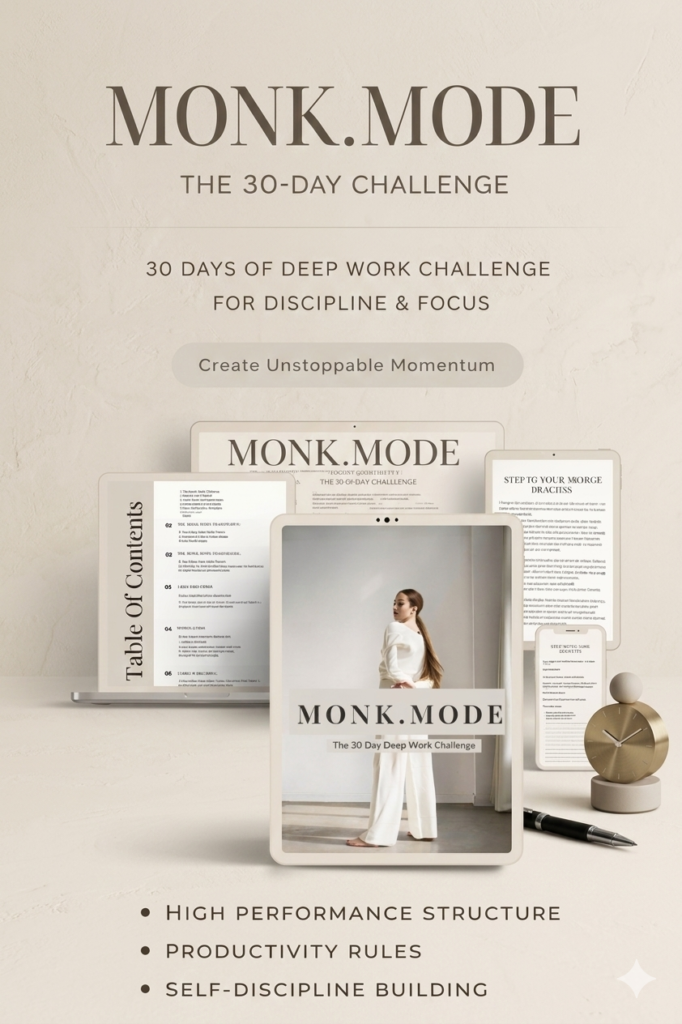
Monk Mode: The Mindset Shift That Separates Winners from the Rest
6. From Comparison Trap to Self-Defined Success
Scrolling through social media highlight reels can make you feel like you’re behind, inadequate, or failing. But someone else’s pace isn’t your roadmap.
How to apply it:
- Define success on your own terms: Maybe it’s flexibility, impact, or simply earning enough to live well. Own your version.
- Limit comparison triggers: Curate your digital feed. Follow people who inspire, not people who make you feel small.
- Keep a “win file”: Save testimonials, positive feedback, and milestones. On tough days, revisit it to remind yourself of your worth.
Better yet, check out How a Digital Detox Helps in Breaking Free from Information Overload
7. From Control Everything to Smart Delegation
Solo doesn’t mean you need to do it all. Trying to carry every role—CEO, marketer, admin—only accelerates burnout.
How to apply it:
- Start small: Outsource low-value tasks like admin or bookkeeping.
- Leverage tech: Use automation for repetitive work.
- Invest in support early: The mental relief of having help is worth far more than the cost.
8. From Endless To-Do’s to Strategic Rest
Overwhelm often comes from believing rest is a luxury when it’s actually a strategy. You don’t have to “earn” rest—you need it to function at your best.
How to apply it:
- Schedule downtime like a meeting: Block rest into your calendar as seriously as you would client calls.
- Practice mental recovery: Walks, naps, meditation, or simply unplugging allow your nervous system to reset.
- Redefine productivity: Resting is part of the work cycle—it fuels your next sprint.
9. From Stress Reactivity to Resilience Mindset
Overwhelm isn’t weakness—it’s biology. When stress hits, your brain floods with cortisol and adrenaline, keeping you in “survival mode.”
The good news? With the right mindset shifts, you can train your nervous system to bounce back faster and handle challenges with more resilience.
These mindset shifts turn stress into an opportunity to strengthen your focus and emotional balance instead of letting it control you.
How to apply it:
- Notice early signs: Irritability, fatigue, or constant distraction are your body’s way of flashing warning lights.
- Use micro-resets: A few deep breaths, a walk outside, or even a laugh can release “happy chemicals” (dopamine, serotonin, endorphins) and calm your system.
- Build resilience routines: Journaling, mindfulness, and exercise help regulate stress and make overwhelm less likely to take root.
Want practical tools to help? Check out these 15 Life-Changing Apps That Will Transform Your Lifestyle
Overwhelm Isn’t the End of the Story
Working solo can feel like too much—but that doesn’t mean you’re not cut out for it. Overwhelm is simply a signal: your current approach needs a reset.
By making these nine mindset shifts, you’re not just easing stress—you’re redesigning the way you show up to your work and your life.
Start small. Maybe today, you’ll create your Clarity Grid. Or you’ll add one thing to your “win file.” Or you’ll step away from your desk for a walk instead of pushing through exhaustion.
Each of these mindset shifts compounds, turning survival mode into a life and business that feels focused, resilient, and deeply fulfilling.
Your work deserves your best self. And your best self begins with your mindset.
Frequently Asked Questions
1. How do I stay motivated when working solo?
Motivation fades if you rely only on willpower. Instead, use systems—set a 1–3 task ‘to-focus’ list, celebrate small wins, and reconnect with your ‘why’ to build momentum even on tough days
2. What’s the biggest mistake solo professionals make that leads to overwhelm?
Trying to do everything alone. Many solopreneurs fall into the trap of wearing every hat—CEO, marketer, admin, accountant. The solution? Delegate, automate, and focus on the work only you can do.
Even small mindset shifts—like trusting others to handle tasks or using automation tools—can free up massive mental energy.
3. Can mindset shifts really reduce stress and burnout?
Yes. Overwhelm is both psychological and biological.
By reframing failure, focusing on one task at a time, and setting boundaries, these mindset shifts help you lower stress and build a calmer, more sustainable workflow.










4 comments
Jas
Loved this post. I especially struggle with comparing myself to others on social media. I will use these strategies.
Leilanii Rivilla
I really appreciate you sharing that—comparison can be such a quiet drain on our energy, especially online. I’m glad the strategies felt useful to you.
Samantha Laycock
This was a great blog post. I loved the section on motivation. It is so true that you need to have a plan in place because motivation just doesn’t last.
Leilanii Rivilla
I’m really glad that part resonated with you. It’s so true—motivation can spark the start, but having a plan is what keeps things moving when energy dips. If you’re into building systems that support your goals long-term, grab a copy of Monk Mode you can find it in the digital product category. It surely changed my life!