

You don’t need to run faster—you just need to move with intention.
Because staying productive shouldn’t come at the cost of your peace of mind.
I know how easy it is to lose yourself in the chaos of doing.
I’ve been there—waking up with a full to-do list, rushing from one task to the next, and somehow still feeling like I didn’t do enough. That constant pressure to keep up slowly drains your energy and joy, no matter how much you accomplish.
That’s when I discovered mindful planning—and it changed everything.
It’s not about squeezing more into your schedule; it’s about creating space for what truly matters. It helps you stay productive while staying grounded, calm, and present.
Why Is Mindful Planning So Powerful?
Because peace and productivity can—and should—coexist.
Because peace and productivity can—and should—coexist.
It helps you slow down, realign, and reconnect with what truly matters—your focus, your well-being, and your peace of mind.
Mindful planning isn’t about cramming more tasks into your day—it’s about creating space for what actually fulfills you.
It allows you to stay productive without burning out, to move with clarity instead of chaos, and to end your day feeling balanced instead of drained.
That’s why I’ve started practicing a few simple habits that keep me grounded and intentional, no matter how busy life gets.
I even created a small at-home spa corner with my favorite Amazon finds—calming candles, herbal teas, and essential oils that help me unwind and reset.
9 Mindful Habits That’ll Help You Plan With Purpose
1. Start With Intention, Not Obligation
Every productive day begins with purpose. Before you even touch your planner or open your laptop, take a deep breath and ask yourself:
“What do I want this day to feel like?”
Mindful planning starts with awareness. Instead of focusing on what you have to do, focus on what you choose to do.
When your actions match your intentions, even the busiest day feels lighter.

Start and end your day with calm and clarity.
This planner helps you set daily intentions, unwind mindfully, and create peaceful routines that align with your goals.
2. Plan Around Your Energy, Not Just the Clock
You’re not a machine. Some parts of the day feel natural for focus, others for creativity or rest.
Mindful planning means syncing your tasks with your energy flow.
- Use mornings for deep work and problem-solving.
- Use afternoons for creative or collaborative work.
- Save evenings for reflection or slow-paced tasks.
You’ll get more done with less stress when you stop fighting your natural rhythm.
3. Simplify Your To-Do List
More doesn’t always mean better. A long to-do list can easily turn into a guilt trap.
Try this: choose your “Big Three” — the top three priorities that actually move your goals forward.
Everything else is optional.
This mindful planning habit shifts your focus from doing it all to doing what matters most.
4. Schedule Micro Breaks to Recharge
You can’t pour from an empty cup.
Take five minutes between tasks to stretch, breathe, or simply pause.
These mini breaks help your mind reset, your creativity flow, and your body release tension.
You’ll return sharper and calmer every time.
Here are 9 Easy Micro‑Mindfulness Hacks for a Calmer Workday
5. Make Space for “Being,” Not Just Doing
It’s easy to believe productivity equals constant motion—but real balance comes from stillness too.
Block off time in your schedule just to be.
Take a mindful walk. Savor your coffee. Journal without rushing.
These small, quiet moments remind you that you’re a human being, not a human doing. Try out these: 15 Simple Hacks That Will Boost Your Productivity
6. Reflect and Adjust Daily
Mindful planning isn’t about perfection—it’s about awareness.
At the end of the day, ask yourself:
- What worked well?
- What felt heavy or forced?
- What can I shift tomorrow?
Reflection helps you learn from your days instead of just living through them.

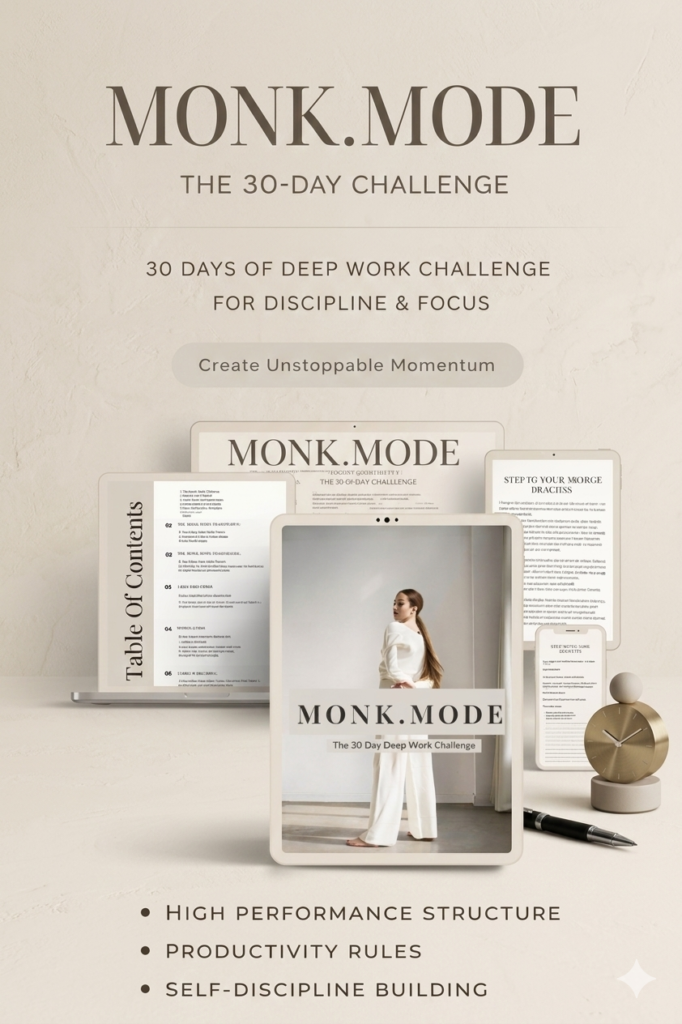
Reset your focus in 30 days.
This challenge helps you eliminate distractions, rebuild discipline, and reconnect with your purpose through mindful daily action.
Become the focused, unstoppable version of yourself.
7. Protect Your Boundaries Like They’re Sacred
You can’t have mindful planning without mindful boundaries.
Say no to things that drain your energy—even if they look “productive.”
Set work hours, social limits, and self-care time that’s non-negotiable.
The more you protect your energy, the more powerful your focus becomes.
8. Plan Flexibility Into Your Schedule
Structure is helpful—but rigidity creates stress.
Mindful planning leaves room for life’s unexpected moments.
Add buffer time between tasks. Let go of the pressure to be perfect.
When plans shift, adapt with grace instead of guilt.
Flexibility isn’t failure—it’s self-compassion in action.
9. End Your Day With Gratitude and Closure
A mindful day deserves a mindful close.
Before bed, pause and reflect: What am I grateful for today?
Celebrate small wins, release what didn’t go perfectly, and reset your mind for tomorrow.
This daily closure helps your nervous system unwind and your motivation stay high.
Mindful Planning in Real Life
Mindful planning isn’t about creating the “perfect” day—it’s about creating a present one.
It’s about learning to move through your schedule with clarity rather than chaos.
The more you practice these habits, the more peaceful and productive your days become.
You stop hustling for balance—and start living it.
If you’re ready to bring mindful planning into your everyday life, download your Self-Care Daily Planner & Journal or start the Monk Mode Challenge to reset your focus and design days that actually feel good.
Frequently Asked Questions
1. What is mindful planning?
Mindful planning is an intentional approach to time management that aligns your tasks with your energy, values, and emotional well-being.
2. Can I still be productive while practicing mindful planning?
Absolutely! Mindful planning helps you focus on what truly matters so you can be productive without burning out.
3. How long does it take to build mindful planning habits?
Most people notice a difference in about 21 days of consistent practice. Start small and stay flexible.
4. What tools do I need for mindful planning?
A simple journal, planner, or mindfulness app is enough—whatever helps you stay present and intentional.











8 comments
Random Little Thoughts
I love this! It’s such a good reminder that productivity doesn’t have to mean pushing ourselves to the limit. Mindful habits really do make all the difference in keeping balance and focus.
LaniAuthor
Thank you so much! I couldn’t agree more — true productivity comes from balance, not burnout. Mindful habits help us stay grounded and present while still getting things done. I’m so happy this message resonated with you!
Lucy
Something I need to start doing again is practice gratitude, particularly at the end of the day!
Lucy | http://www.lucymary.co.uk
LaniAuthor
That’s such a beautiful intention Lucy. Ending the day with gratitude truly shifts your mindset and helps you rest with a lighter heart. Even a simple reflection on one good thing can make a big difference. You’ve got this — it’s never too late to start again!
Colette
I love this! My problem is having so many tasks and not knowing which one to cross off first. And then I get side-tracked. This is very helpful, thanks for sharing!
LaniAuthor
Thank you so much! I totally get that — it’s so easy to feel overwhelmed when there’s a lot on your plate. Prioritizing can be tricky, but taking it one small step at a time really helps. I’m so glad you found this helpful! You’ve got this
Karen Kasberg
So many helpful tips on practicing mindfulness. My favorite is protecting boundaries, as we so often give in to them easily. Thanks fo sharing.
LaniAuthor
Thank you so much Karen! I’m really glad the tips resonated with you. Protecting our boundaries truly makes a huge difference — it’s one of the most empowering acts of self-care we can give ourselves. I appreciate you taking the time to share your thoughts!