
This post contains affiliate links. View the disclosure for more information
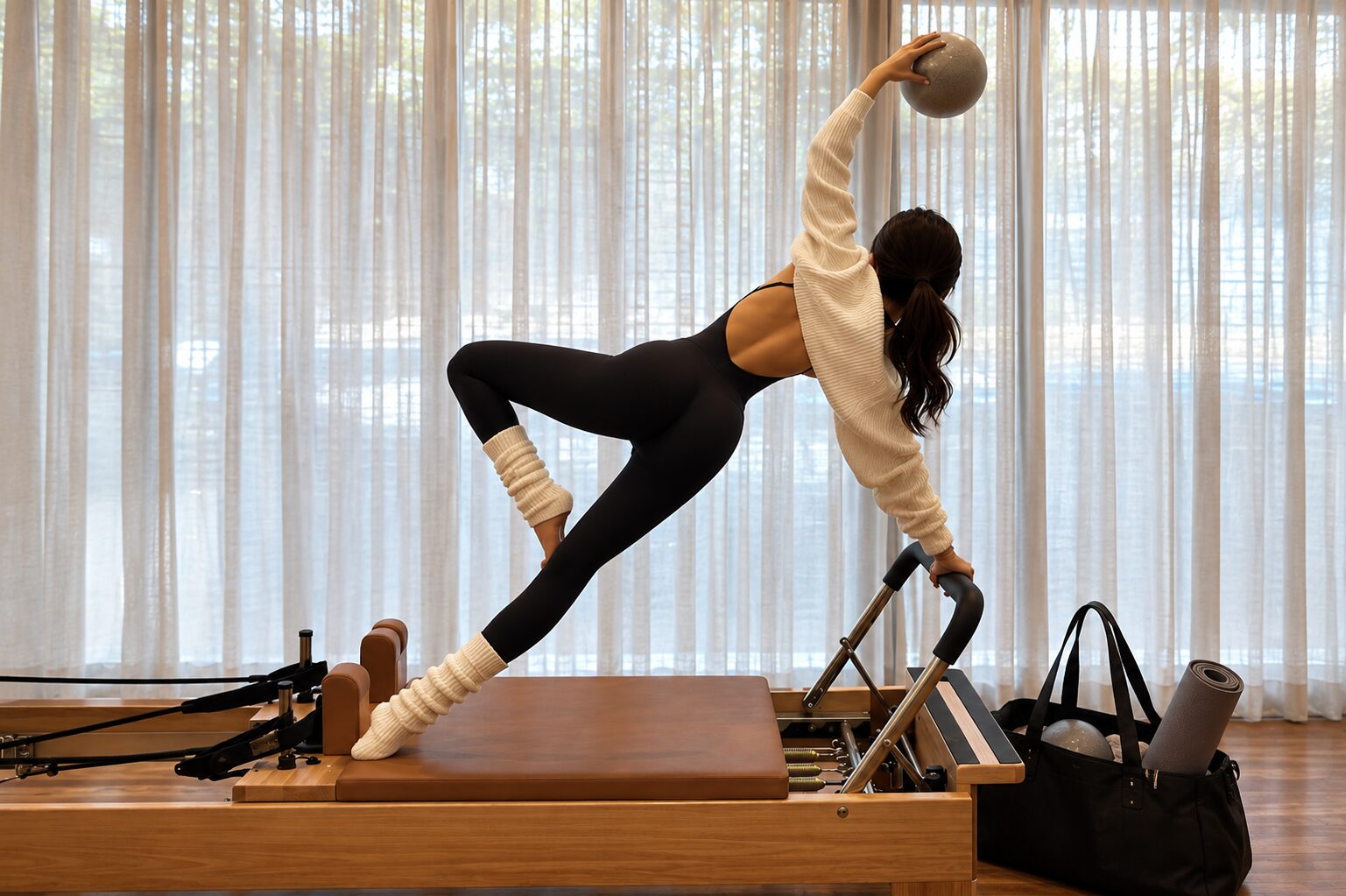
Nobody told me Pilates would change how I walk into a room.
I thought I was signing up for a workout. It turned out to be closer to a recalibration. How I move. How I hold tension. How I feel in my body on a regular Tuesday with nothing special happening.
These are my Pilates bag essentials, why each one is in there, and what I left on the shelf. Nine things worth having in your 40s, nothing that does not earn its spot.
Starting Pilates in your 40s is not a fitness decision. It is a decision about the woman you are becoming. Every time you show up on that mat, you are choosing yourself in a decade that hands you every excuse not to. That is what this decade actually asks of you. The bag is just how you make it real.
What Pilates Actually Does for Your Body in Your 40s
Pilates builds deep core strength, improves posture, and trains the stabilizing muscles around your joints. Research on Pilates in midlife women shows measurable improvements in balance, core strength, and flexibility after eight to twelve weeks of consistent practice.
Those outcomes matter more in your 40s than in your 20s. Your joints are carrying more years of use, your recovery window is longer, and the muscular imbalances you managed to ignore for two decades are making themselves known. Pilates addresses all three without destroying your body in the process.
9 Pilates Bag Essentials Worth Having
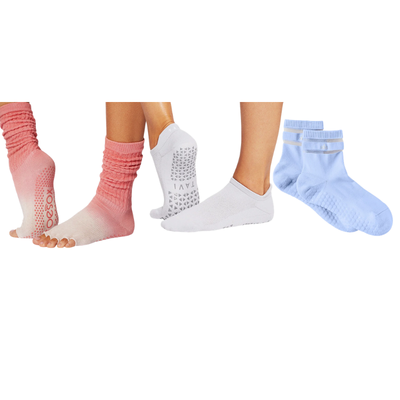
1. Grip Socks
Grip socks are non-negotiable. They keep your feet anchored to the reformer carriage and grip the mat during footwork sequences. Without them, your alignment shifts before the class has properly started, and every correction your instructor gives you becomes harder to hold.
Look for socks with silicone traction on both the top and the bottom of the foot. Toesox, Tavi and Alo make the ones worth buying. Get two pairs so you are never hunting for a clean set on a class morning. Expect to pay between $16 and $ 47 per pair.
2. High-Waist Compression Leggings
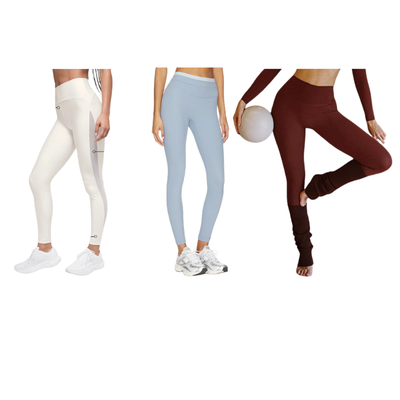
A high-waist legging in your 40s is functional. The waistband supports your core during rollbacks and spring work, and the compression keeps everything stable through movements that make lower-rise options slide constantly.
Alo Yoga, Wiskii, and Revolve are my fave picks. A quality pair lasts years and feels different on your body from the first wear. Buy once. Wear for seasons.
3. Pilates Ring
The Pilates ring, also called the magic circle, adds resistance to mat exercises without changing the movement pattern itself. Placed between your thighs, ankles, or hands, it recruits muscles that would otherwise move through an exercise without fully engaging.
For women in their 40s, the ring is valuable for inner thigh and pelvic floor work. Both areas have a direct relationship with how your body feels day to day, not just inside the studio. A good ring like Better Me or PhysKcal runs $20 to $35 and comes with padded handles.
4. Mini Resistance Bands
Mini bands extend your mat practice. They add load to glute work, hip abductions, and leg series without requiring any equipment. If you train at home between studio sessions, they make the difference between a full workout and a partial one.
Get a set of three in light, medium, and heavy resistance. Stakt and Fit Simply both make sets worth keeping long-term. The full set costs around $15 to $34 and weighs nothing in your bag.
5. Small Pilates Ball
The Pilates ball looks minor until you use it. Placed at the base of your spine during ab work, it changes the relationship between your lower back and the floor. Women with any lower back sensitivity feel the difference immediately and wonder why they waited.
Inflate it slightly less than full so there is give, not rigidity. Move Active and BetterMe are around $12 to $39. Buy it before your second class.
6. Foam Roller
Recovery in your 40s is not optional. Your muscles take longer to respond than they did ten years ago, and that is your body giving you information, not failing you. A foam roller used before or after your session releases fascia, improves circulation, and changes how sore you feel the next day.
Oceanform ripple foam roller is the standard everyone keeps coming back to. Use it on your thoracic spine, IT bands, and calves. Those are the three areas Pilates works hardest. This is also where a real recovery and restoration ritual begins, not just a workout.
7. Massage Ball
The foam roller handles your larger muscle groups. The massage ball handles everything else: the piriformis, the arch of your foot, the space between your shoulder blades that no roller can quite reach.
A lacrosse ball costs $7 and works well. A therapy or recovery ball runs $20 to $30, and a good massage ball about $29 is gentler on bony areas. Stand on it barefoot after class. Your feet will tell you within thirty seconds why it belongs in the bag.
8. Insulated Water Bottle and Electrolytes
Hydration in your 40s deserves more attention than most women give it. Hormonal changes during perimenopause and menopause affect how your body regulates temperature and holds water. You will overheat faster than you expect, and water alone is often not enough.
Use an insulated bottle that keeps your water cold for hours. Add electrolytes alongside it. LMNT and Cure Hydration both dissolve without sugar. Your energy in the second half of a session depends on this more than any single piece of equipment.
9. Magnesium Spray
This is the item most women in their 40s don’t have yet, and the one that changes how the morning after a hard session feels. Magnesium applied topically accelerates muscle recovery by supporting relaxation at a cellular level. Apply it to your calves, hamstrings, and lower back before bed on training days.
Alo Magnesium Oil Spray and NUE Magnesium Ease make the standard topical spray at around $25 – $48. Add it to your post-Pilates ritual. It fits the same logic as rebuilding the whole morning around this practice; small inputs that compound into a body that feels better across the whole week, not just on training days.
Pilates Home Equipment That’s Worth the Investment
Studio Pilates is not the only path. Many women in their 40s build a consistent home practice that matches what they get in a class, especially once the foundational movements are in the body. The grip socks, ring, bands, and ball above all transfer directly. These four pieces are what take the home practice further.
Start with the mat. Build from there.
1. A Pilates Mat (Not a Yoga Mat)
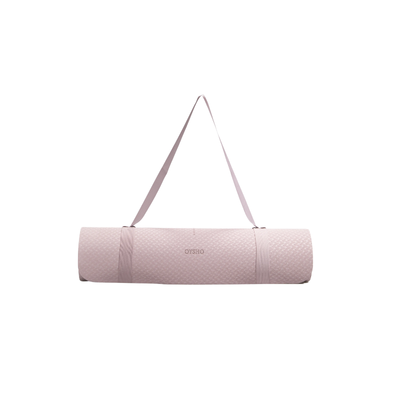
A Pilates mat is thicker than a yoga mat. The extra density matters during spinal articulation and rolling exercises where a standard yoga mat puts your vertebrae directly against a hard floor. The difference is not subtle.
Look for a mat at least 8mm thick, ideally 10mm. Wohao and Oysho both make mats worth buying. Around $45 to $60. This is the first piece of equipment to own before anything else.
2. Home Reformer
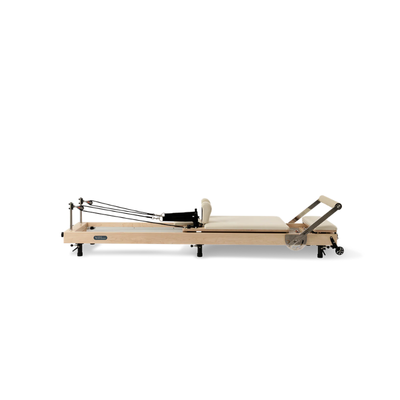
A home reformer is the biggest investment on this list and the most worth it if you plan to practice seriously. The reformer does what mat work cannot — spring resistance, carriage movement, and the full range of classical Pilates programming.
Ciga Pilates is the accessible entry point at $300 to $600 [shopmy]. flopilates and Your Reformer are the serious long-term buy, starting at $2,000 and up. You do not need a reformer to start. You will eventually want one if you stay with this.
3. Pilates Barrel
The Pilates barrel, also called a spine corrector, is used for back extension, hip flexor stretching, and spinal mobility work. For women in their 40s who carry tension in the thoracic spine from sitting, a few minutes on the barrel can feel like a structural reset.
A Pilates half barrel runs $150 to $300 and stores easily under a bed or in a corner. Use it for five minutes after any session and notice the difference in how your spine sits for the rest of the day.
4. Freestanding Barre
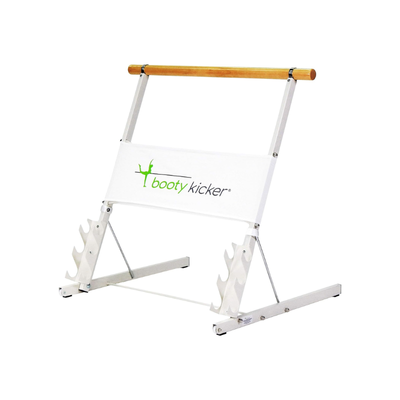
A freestanding barre is the most underrated addition to a home Pilates practice. It gives you a stable surface for balance work, standing leg series, and any movement that needs a fixed point. It also signals to your nervous system that this space is for intentional movement.
A freestanding double barre runs $80 to $150 and needs no installation. Set it up once. Leave it there. For women building a real home practice, this is the piece that makes the space feel like a studio.
How to Build Your Pilates Bag Without Overthinking It
Start with three things: grip socks, a resistance band set, and a foam roller. That covers your first month and everything you need to show up. Add the ring and the ball at the six-week mark when you understand what your body is being asked to do. Add the recovery tools when your muscles start asking for them.
Women who stay with Pilates in their 40s are not the ones with the most equipment. They are the ones who stopped waiting until everything was perfect. Getting your Pilates bag essentials sorted just makes it easier to go.
Frequently Asked Questions
Is Pilates good for women in their 40s?
Pilates is well-suited to women in their 40s. It builds deep core and stabilizing muscle strength, improves posture, and addresses the joint sensitivity and muscular imbalances that intensify in midlife. It is low impact in a way that protects the joints while still producing real, measurable strength gains.
What should I bring to my first Pilates class?
Grip socks are required at most studios. Wear form-fitting clothes so your instructor can see your alignment. Bring water. Everything else comes after you have been a few times and know what your body needs from the practice.
What is the difference between a Pilates ring and resistance bands?
A Pilates ring adds resistance to bilateral movements, especially inner thigh, shoulder, and pelvic floor work. Resistance bands add load to unilateral exercises like glute work and leg series. Both belong in your bag because they train different movement patterns.
How long before Pilates shows results in your 40s?
Most women notice better posture and reduced tension within two to three weeks. Visible strength changes show at six to eight weeks of consistent practice. The shift in how you carry yourself through a day tends to come first.
How often should women in their 40s do Pilates?
Two to three sessions per week produce consistent results. Three reliable sessions beat six sporadic ones every time. Consistency matters more than frequency in this decade.
The bag is sorted. Now the deeper work — Becoming Her: The Identity Reset Workbook is where you get clear on exactly who you’re building toward. Go grab it.




Add comment