

Feeling lost rarely looks like a breakdown. More often than not, it just looks like a very busy Tuesday.
You’re functioning. Maybe even thriving on paper. But somewhere underneath the routine, you’ve lost the thread of who you actually are — and you’re not sure when it happened.
That quiet disconnection is exactly what this post is about. If you’re trying to figure out how to find yourself again, you’re not broken. You’re just overdue for an honest conversation with yourself.
I spent years fully capable and quietly disappearing at the same time. What I know now: you don’t have to hit rock bottom to have lost yourself. Sometimes, all it takes is years of putting everyone else first.
This post is about recognizing what that loss actually looks like, why it happens to women who are doing everything right, and what it actually takes to find yourself again.
What Losing Yourself Actually Looks Like
The first step in learning how to find yourself again is recognizing what the loss actually looks like — because it’s rarely dramatic.
For most women, it’s much quieter than that. It’s not a breakdown. It’s a slow, barely noticeable drift — one accommodation, one postponed want, one more year of putting yourself last. Here are the signs that tend to show up first.
1. You don’t know what you enjoy anymore — outside of what you do for others.
Someone asks what you’re into, and your mind goes blank. Not because you’re shy. Because you genuinely can’t remember the last time you did something just for you — no productivity angle, no one to take care of, no reason other than you wanted to.
2. You say yes when you mean no — and you’ve stopped noticing the difference.
It’s become automatic. Somewhere along the way, “yes” became your default — not because you want to, but because you’ve forgotten there’s another option.
3. You’ve become the version of yourself that’s easiest for everyone else to deal with.
Agreeable. Uncomplicated. Low-maintenance. These got treated like compliments so long that you started to believe they were.
4. You feel more like a function than a person.
Mother. Partner. Employee. Friend. These roles are real, and they matter — but the person underneath them feels blurry. Like she got quietly edited out somewhere between last year and the year before.
5. Your opinions feel borrowed.
From your circle. From social media. From whatever sounds right in the room. When you sit in real quiet, you’re not entirely sure what you actually think.
6. Rest has to be earned.
You need to be tired enough, useful enough, done enough before you allow yourself to stop. Taking care of yourself feels like something you have to justify. If this one landed — here are 25 self-care ideas that don’t require an excuse.
7. You can’t remember the last time you did something just because you wanted to.
Not productive. Not for anyone else. Just because you wanted it. A meal, a show, an afternoon, a purchase. Something that was only ever yours.
8. Your relationship with yourself has gone quiet.
Not hostile. Just distant. Like a friendship you’ve let drift — and the longer you leave it, the harder it feels to know where to start.
What I’m Reading (and Recommending)
If you’re in this season, a few things that helped me think about identity differently:

Untamed by Glennon Doyle
The Gifts of Imperfection by Brené Brown

Why This Happens (And Why It’s Not a Personal Failure)
Losing yourself isn’t a weakness. It’s what happens when a woman prioritizes her usefulness over her identity for long enough.
It starts small. You adjust here, accommodate there, postpone something that felt important until a less chaotic season. Then one day, the less chaotic season never arrives, and you can’t even remember what you were waiting to reclaim.
Research on identity and self-concept shows that our sense of self requires consistent attention — it doesn’t maintain itself automatically. The women most at risk of this quiet lostness are often the most capable ones: so good at managing everything else that the inner work gets indefinitely deferred.
This is also what makes learning how to find yourself again feel so disorienting at first. Nothing is technically wrong. You’re not failing anyone. You’re just… not quite there.
How to Find Yourself Again
Before we get practical, knowing how to find yourself again doesn’t mean starting from zero. It’s not about becoming someone new — it’s about getting honest about where you’ve been, so you can decide who you’re becoming.
Start with honest questions.
Not a new planner. Not a vision board. Five minutes of real journaling with these:
- What do I actually want — right now, not eventually?
- Where am I living for someone else’s approval?
- What have I quietly given up that I’d like back?
Write the true answer, not the good one.
Let go of who you’ve been performing.
The version of you who’s always available, never difficult, endlessly patient — she’s not a lie, but she’s not the whole story. You’re allowed to have edges. Opinions that inconvenience people. Needs that don’t fit neatly into everyone else’s plans.
Stop waiting for the right time.
The woman who knows how to find herself again doesn’t wait for things to calm down. Conditions are never going to align perfectly. She makes choices now, with what she has. Even protecting one hour a day just for yourself changes the trajectory more than you’d expect.
Take one small, true action.
Not a reinvention — one thing. A class you take for no reason. A boundary you hold even when it’s uncomfortable. These micro-habits are a good place to start — small enough to begin today, powerful enough to compound into something real.
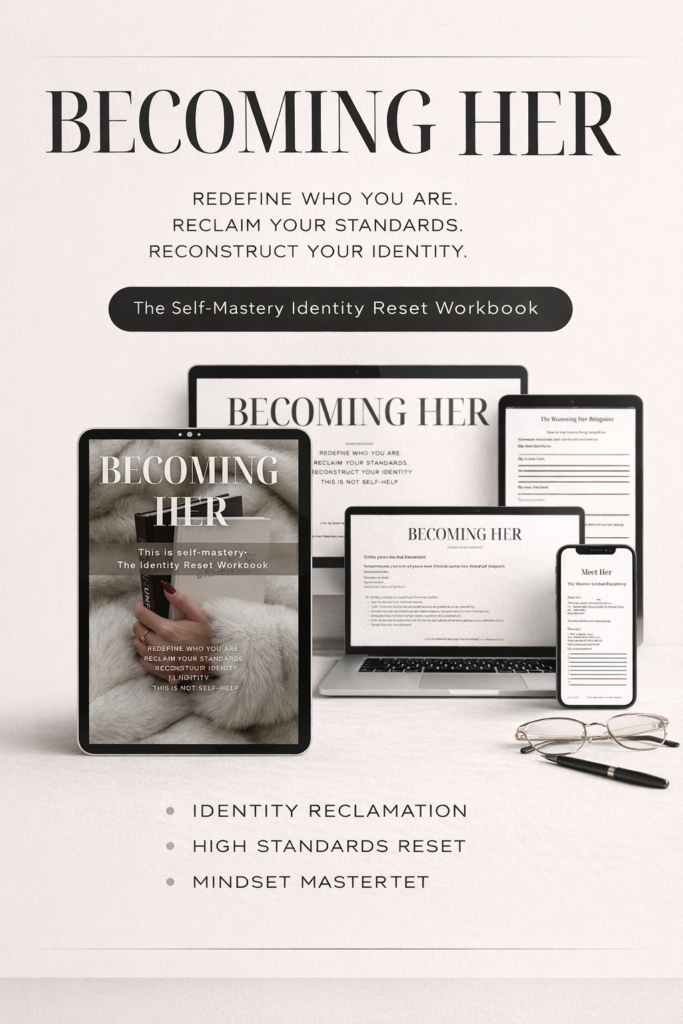
The Becoming Her: The Identity Reset Workbook is exactly what this post points toward — a guided process for the woman who is done drifting and ready to get honest about who she’s been and who she’s choosing to become.
Not affirmations. Not generic prompts. A real identity reset, step by step.
Your Starting Point
Learning how to find yourself again doesn’t happen in a weekend. It happens in the quiet, consistent choice to take yourself seriously — starting with one honest look at where you actually are right now.
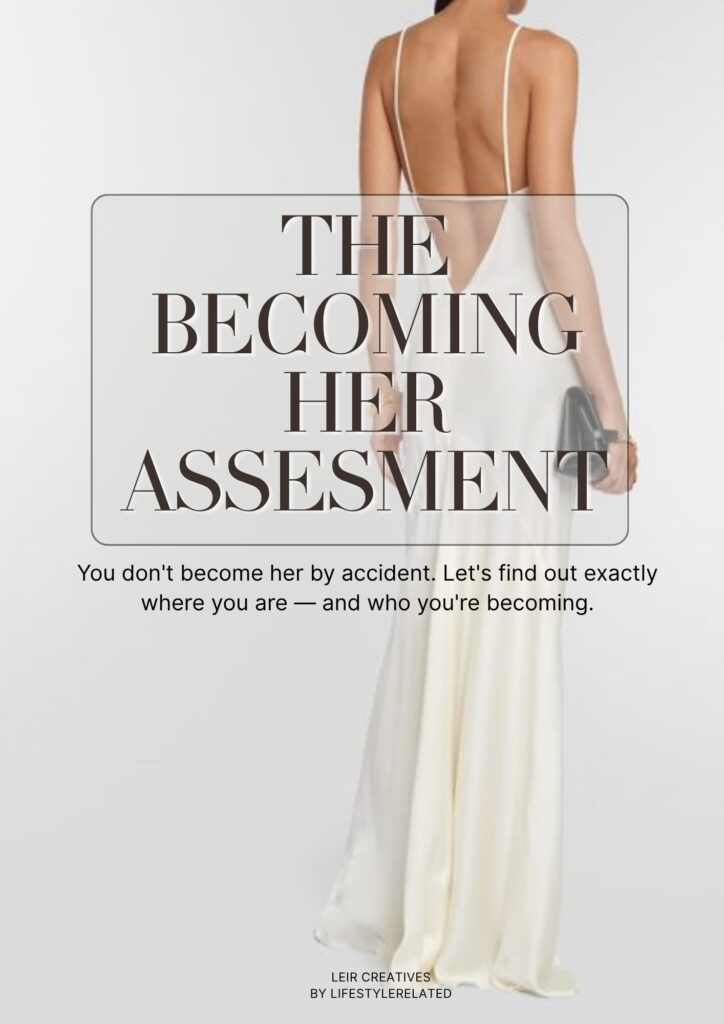
That’s what the Becoming Her: Self Assessment is for. 15 questions. A clear picture. Your real starting point — not the one that sounds good, but the one that’s actually true.







Add comment